
As temperatures drop, our homes begin to change too. We bring out heavier textiles, richer skincare products and other items for warmth and comfort. These seasonal changes can create extra clutter in compact homes, especially in small bathrooms, where towels, toiletries and additional layers all compete for limited space.
This accumulation can quickly make a small bathroom feel overwhelmed. The problem is not always a lack of space, but how that space is organised. When bathroom surfaces and sink edges become default landing spots, the room starts to feel smaller and more chaotic. Making better use of vertical space is one of the most effective ways to maintain a calm, functional environment during the colder months.
According to design experts, the 2026 trend is moving away from purely minimalist bathrooms towards spaces that combine comfort, luxury and high functionality. This includes smart storage solutions designed to reduce visual noise without sacrificing accessibility.[Decorilla]
Preparing small bathrooms for colder weather
The pressure starts quietly: an extra towel on the radiator, a thicker robe, a second moisturiser near the basin. Suddenly, a room that worked perfectly well in summer begins to feel crowded. Organising the bathroom before winter means noticing these changes early, before additional items start taking over the available surfaces.
In compact homes, bathrooms often absorb overflow from other rooms: heavier linens, guest towels, winter toiletries and items that need to dry. Seasonal planning becomes especially important in a small space, where one extra basket or a few bottles can interrupt movement and comfort. Effective storage begins by deciding what needs to remain close at hand and what can be moved higher or out of the immediate eyeline.
A Weekend Decluttering Plan
Home organisation experts suggest a structured approach to seasonal decluttering. Set aside a weekend with a clear plan.[Country Living]
Saturday Morning: Identify problem areas and list what needs organising. Focus on small spaces such as a single cabinet to build momentum.
Saturday Afternoon: Sort items into three categories: keep, donate/sell and discard. Be decisive with items unused last season.
Sunday: Find logical homes for the items you are keeping. Remove the donate and discard piles promptly so they do not become clutter again.
Storing extra towels and seasonal items
Textile management is one of the first practical challenges. Towels can become more difficult to manage in colder weather because they often take longer to dry and may need to be rotated more frequently. With thicker bath sheets, guest towels and robes, a compact bathroom can quickly seem to run out of storage. The real problem is that everything begins competing for the same visible areas.
A practical approach is to organise items according to how often they are used. Keep everyday towels at a comfortable, reachable height. Move backup items to secondary zones such as upper shelves or high cabinets. Rolled towels can be easier to remove from shallow shelves than tall folded stacks, while grouping similar items together prevents clean laundry from accumulating in whichever corner happens to be free.
The most difficult items are often temporary extras: a drying robe, a spare bath mat, a guest hand towel or seasonal toiletries. Giving these categories a fixed place, however small, prevents them from spreading across taps, radiators and chair backs. If seasonal items do not have a designated zone, they usually end up occupying the nearest available surface.
Keep everyday towels and toiletries within easy reach.
Move backup or seasonal items into higher, less visible storage zones.
Clearing bathroom surfaces of unnecessary clutter
After textiles, the next pressure point is usually the bathroom surface around the basin. In a small bathroom, these areas fill up first because they are the easiest places to put things down. Yet this is also where clutter has the strongest visual impact. A crowded basin makes the whole room feel busier, smaller and harder to clean, even when only a few items are involved.
In smaller bathrooms, visual overload can happen rapidly, and there's a risk of items getting knocked over; therefore, only exhibit the products you use most frequently and group them for a neater appearance.
– Jamie Hord, founder of Horderly Professional Organizing[The New York Times]
Protect bathroom surfaces from becoming general storage. Keep only the products used every morning and evening within easy reach, and move backup soap, duplicate skincare and unopened toiletries elsewhere. If you want daily essentials to remain visible, grouping them on a tray can make the arrangement feel intentional rather than scattered. The aim is to preserve as much open surface as possible.
This is about more than appearance. Clear surfaces make everyday routines easier: items are quicker to find, cleaning takes less time and bottles are less likely to be knocked over. Tidier surfaces also make vertical storage opportunities more obvious. Once counters are clear, it becomes easier to see how walls, doors and upper shelves can take over the work that horizontal areas were doing inefficiently.
This is particularly useful when several people share a bathroom. A sink crowded with everyone's products can quickly create friction, while a pared-back surface containing only daily essentials keeps the room practical and calm for everyone.
Maximising vertical storage potential
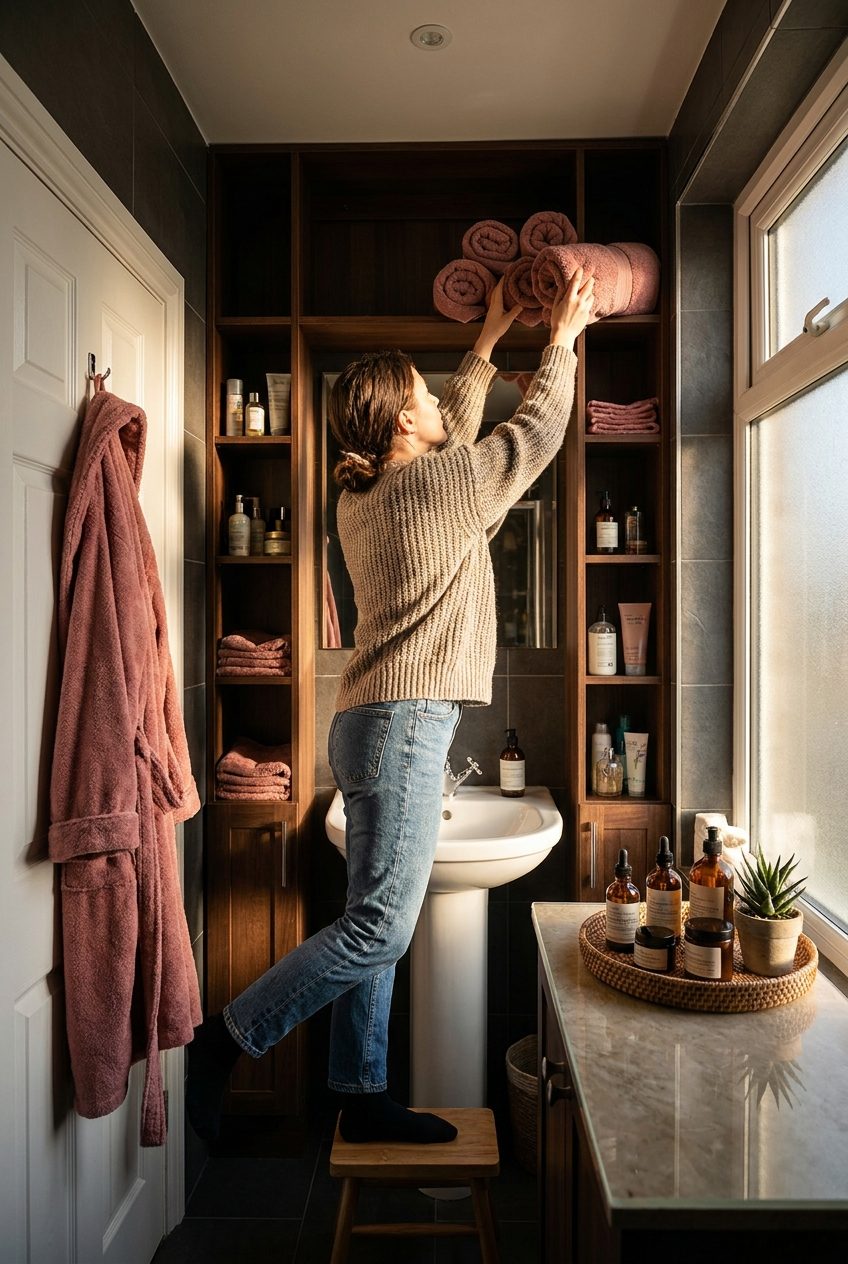
Once the most obvious surfaces are clear, some of the best opportunities are above eye level, behind doors and along walls. These areas are often available but overlooked. We tend to fill the floor, basin and nearest shelf first, then assume we have run out of room. Using vertical space effectively can make the difference between a compact bathroom that feels organised and one that quickly becomes cramped.
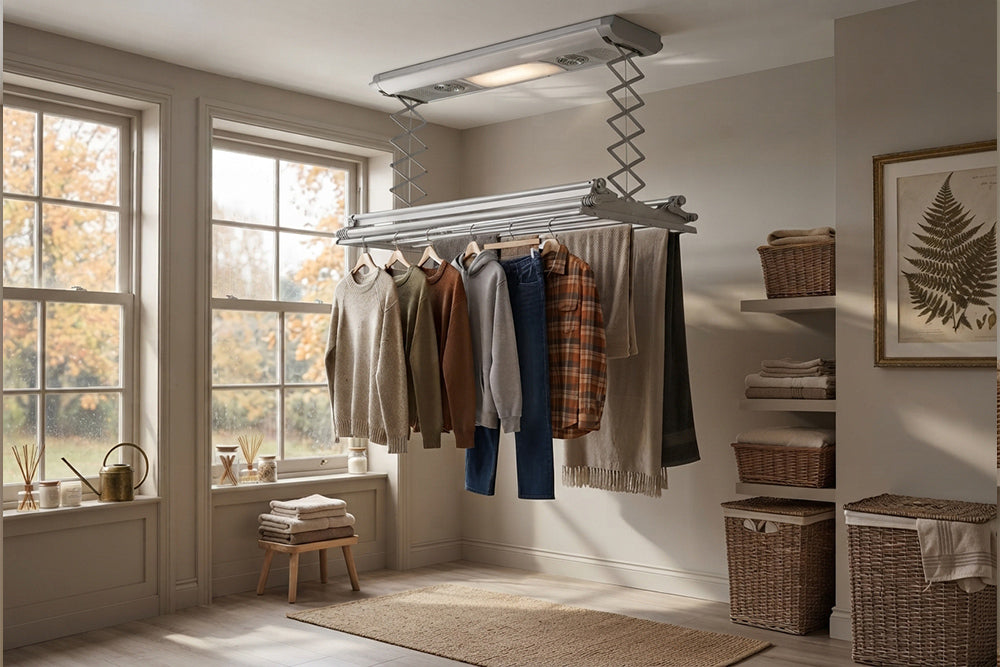
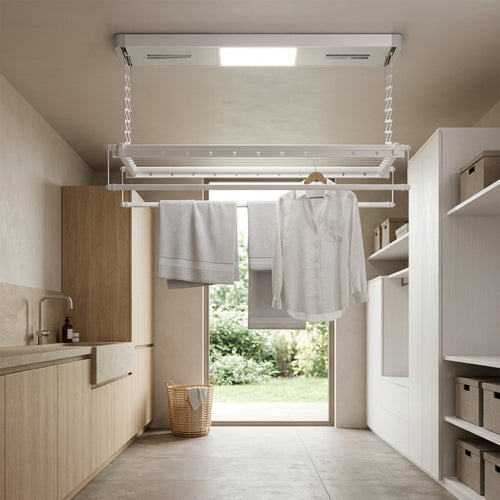
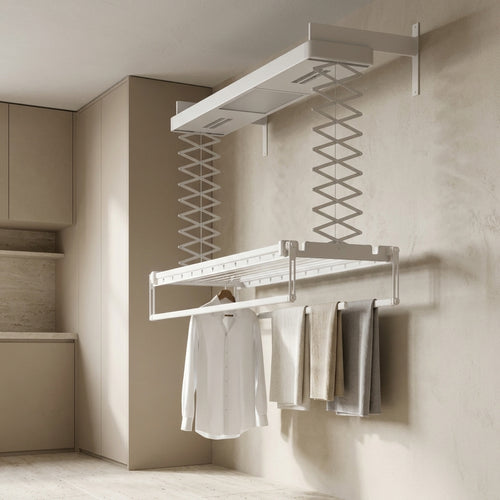
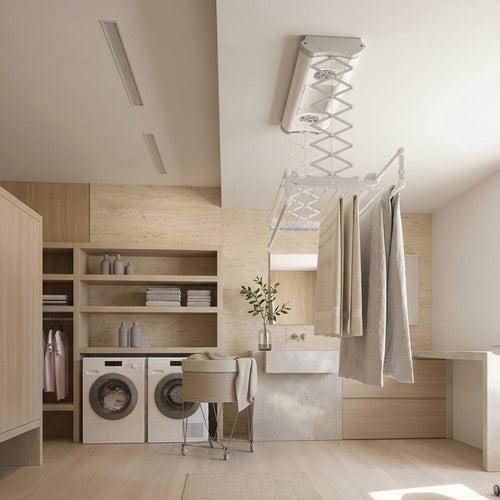
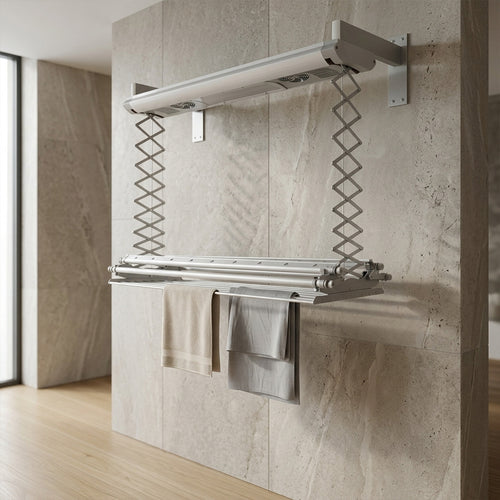
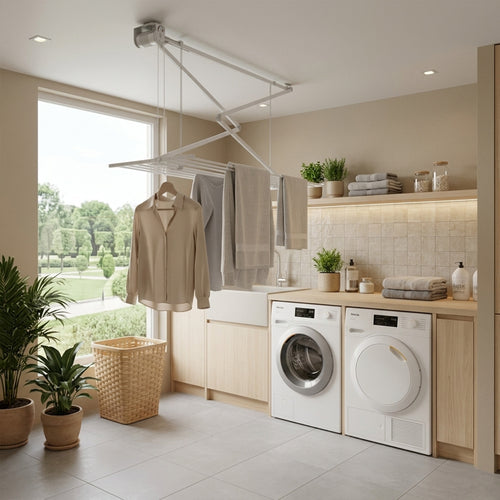
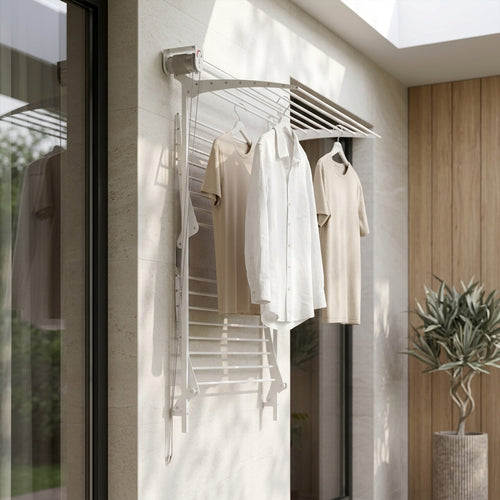
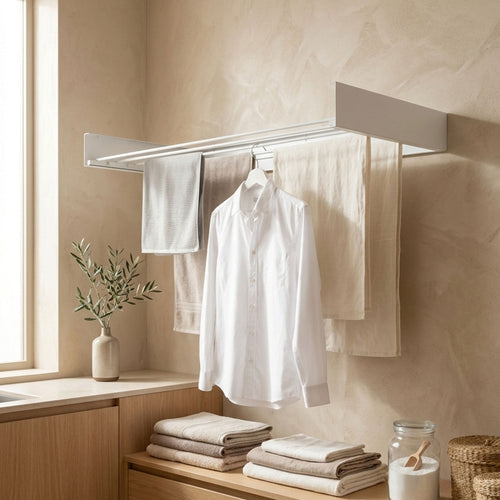
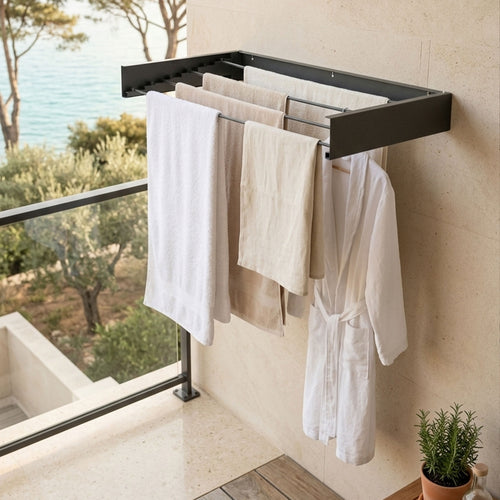
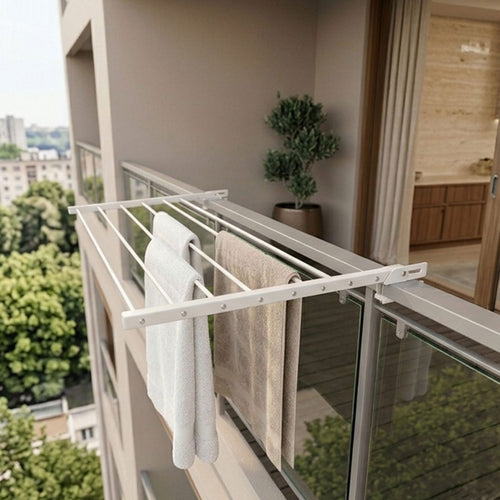
Using height well adds more than storage capacity. It protects movement space, keeps damp textiles off the floor and reduces the visual weight of low-level clutter. In a room with limited circulation, even a few misplaced items can make simple tasks such as stepping out of the shower feel awkward. Wall-mounted drying solutions follow the same principle, creating useful drying space without permanently occupying the floor. Explore our wall-mounted airers for compact bathrooms and laundry areas.
Adding over-door hooks and racks
The back of the door is one of the most useful surfaces in a small bathroom. It can hold items that need frequent access but do not require permanent shelf or floor space, such as towels between washes, bathrobes and short-term laundry.
Sources on compact bathroom organisation repeatedly identify walls and doors as underused assets, and over-door racks are a good example. They use an existing surface, require no floor area and help move bulky items away from the centre of the room. This is particularly valuable in a very small bathroom, where even one misplaced item can disrupt movement and order.
| Vertical Storage Solution | Best For | Key Benefit |
|---|---|---|
| Over-the-door Organisers | Robes, used towels, seasonal accessories | Utilises wasted space without drilling.[Ideal Home] |
| High Wall Shelving | Backup toiletries, spare towels, rarely used items | Keeps non-essentials out of daily sightlines. |
| Wall-Mounted Airers | Damp towels, delicate items needing to air dry | Frees up radiators and floor space. |
| Ladder Shelves | Rolled towels, decorative items, small baskets | Adds storage with a minimal footprint. |
Hooks work best when each one has a specific role rather than being treated as overflow storage. Dedicate one hook to a robe, another to the current towel and another to an item that needs to air out. This keeps the door functional instead of overloaded. In rentals or tiled bathrooms, non-permanent solutions can add useful hanging points without permanent alterations. Organisation becomes easier when every hook has a clear purpose.
Using high shelving for rarely used items
Once the door is being used more effectively, the upper part of the room can store items that are not needed every day. High shelving works particularly well for infrequently used goods because it removes them from the main sightline while keeping them accessible. Spare toiletries, unopened supplies, backup towels and seasonal products are all good candidates for these higher zones.
Sources also underline a useful principle: think vertically to increase storage capacity before adding more furniture or storage at floor level. Lighter and less frequently used items should occupy the upper zones, while everyday essentials remain lower and easier to reach. A simple, repeatable system usually works best. Similar containers grouped by category make items easier to retrieve and reduce visual noise, particularly on open shelving.
For a compact household, this arrangement helps prevent every seasonal change from becoming a complete reorganisation. Instead of searching for new space each autumn, you create a permanent structure that can adapt as routines change. Extra hand towels can move upwards when they are not needed, while winter toiletries can come down for regular use. This is the real value of effective small bathroom storage: giving each category a predictable place so the room remains calm, functional and liveable throughout the colder months.
- [Decorilla] Decorilla, Bathroom Trends 2026: What’s In, What’s Out, and What’s Next
- [Country Living] Country Living, How to declutter your home in one weekend: A 9-step guide
- [The New York Times] The New York Times, Great Ideas for Organizing a Small Bathroom
- [Ideal Home] Ideal Home, The clever clutter busters I swear by as a small home dweller