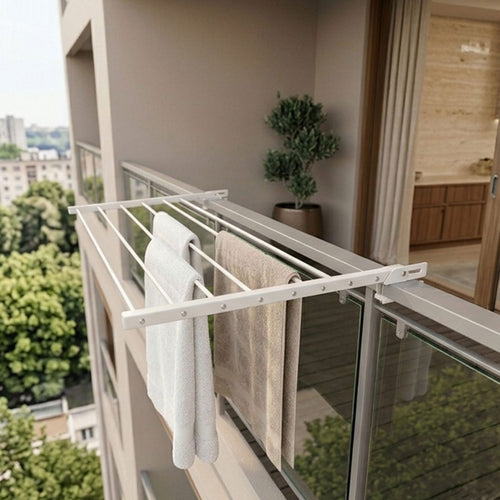

As the seasons change, so does the household laundry routine. Autumn brings cooler, wetter weather and a different mix of fabrics: bulky jumpers, thick denim, hoodies and outerwear gradually replace lightweight summer clothes. A drying setup that works well for T-shirts and light fabrics may become less practical when loads get heavier and take longer to dry. Preparing your laundry area before the wetter months can help prevent prolonged drying times, clutter and excess indoor humidity.
Adjusting to seasonal fabric changes
The seasonal shift starts with the laundry itself. Autumn changes the weight, volume and drying time of each load, so caring for clothes involves more than simply washing them. Thicker garments need more room, reliable support and enough space between items for air to circulate effectively.
The extra weight of jumpers and coats
In cooler weather, the contents of the laundry basket begin to change. Lightweight summer fabrics are replaced by wool jumpers, sweatshirts, heavier jeans and coats, sometimes already damp from rain. These items can retain more water, stay heavier for longer and require more space to dry properly.
The hidden health risks of indoor drying
Drying clothes indoors can increase room humidity by up to 30%, creating conditions in which mould spores such as Aspergillus can thrive. While healthy immune systems can generally cope with small amounts, prolonged exposure can pose a greater risk for people with asthma, compromised immunity or other respiratory conditions.[The Conversation] The tragic case of Awaab Ishak in 2020, a toddler who died following prolonged exposure to mould in his home, led to ‘Awaab’s Law’ in the UK, requiring landlords to address damp and mould problems within defined timeframes.
This is where summer habits can become less effective. A setup that comfortably accommodates T-shirts may quickly become congested with bulky layers. Thick fabrics take up more rail space, overlap more easily and restrict airflow. The result can be longer drying times, lingering dampness and the stale smell mentioned in Hills Home’s guide to drying clothes faster indoors during colder months.
In practical terms, the challenge is about both moisture and how the home functions. When heavy knitwear ends up draped over chairs, doors or radiators, the drying area begins to spread into the rest of the room. Floors become cluttered, movement is restricted and the laundry starts interfering with everyday living.
Checking your current drying setup
Before heavier autumn loads become part of the weekly routine, it is worth checking whether your existing drying setup can cope with repeated use. A reliable system does not need to be complicated, but it should support wet garments without bending, sagging or forcing clothes too close together. Consider the available hanging space, the stability of the structure under load and whether larger items can be hung without excessive folding or overlap.
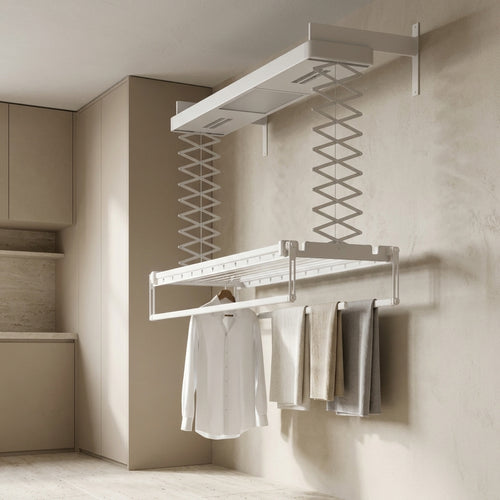
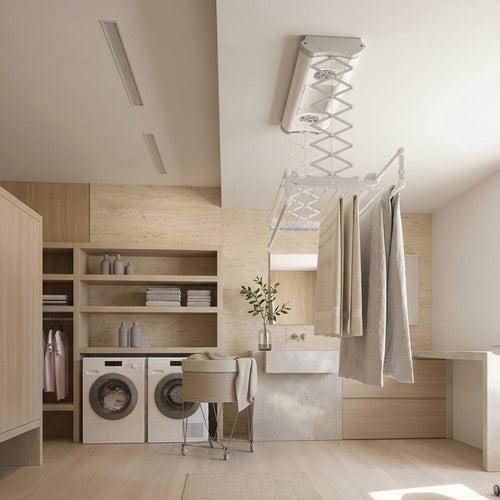
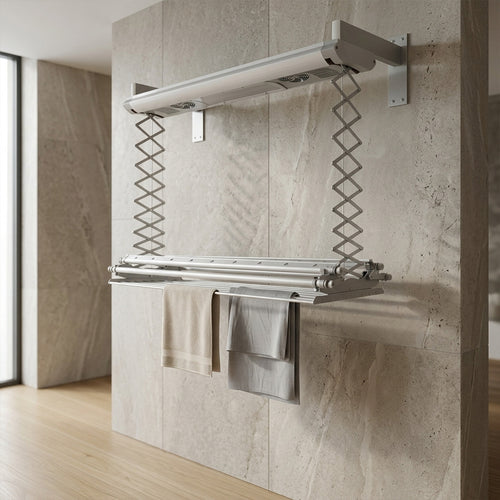
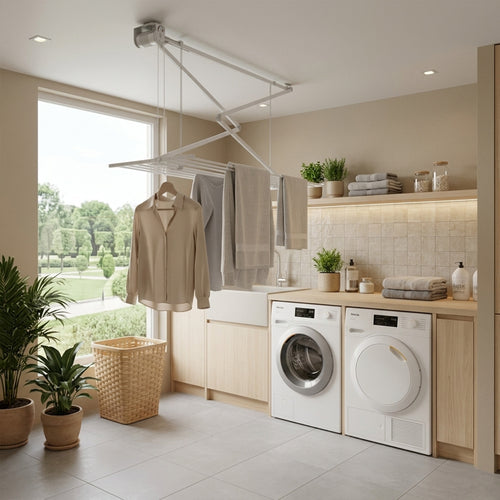
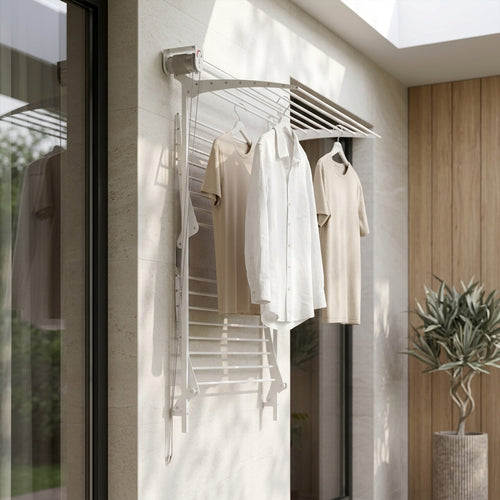
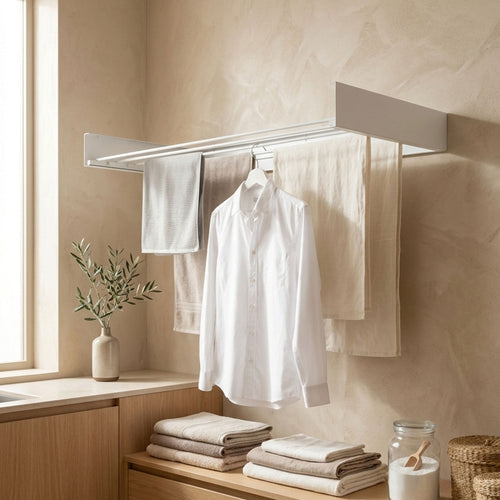
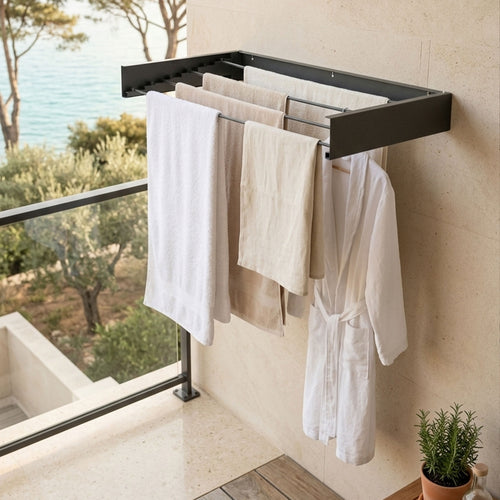
Source materials highlight the benefits of space-saving wall- and ceiling-mounted solutions, particularly in compact homes. Technical documents from 15 April 2026 on laundry optimisation and a Latvian small-apartment project describe a similar principle: moving the drying area onto the wall or overhead can improve order, functionality and the overall balance of the room.
Sustainability consultant Shannon Kenny advises choosing a drying rack that allows adequate spacing between items. This promotes air circulation, which is important for faster drying and for helping prevent musty smells. Overloading a rack traps moisture and delays drying.[Business Insider]
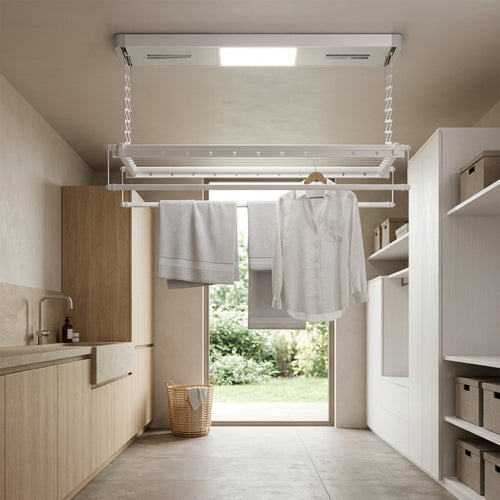
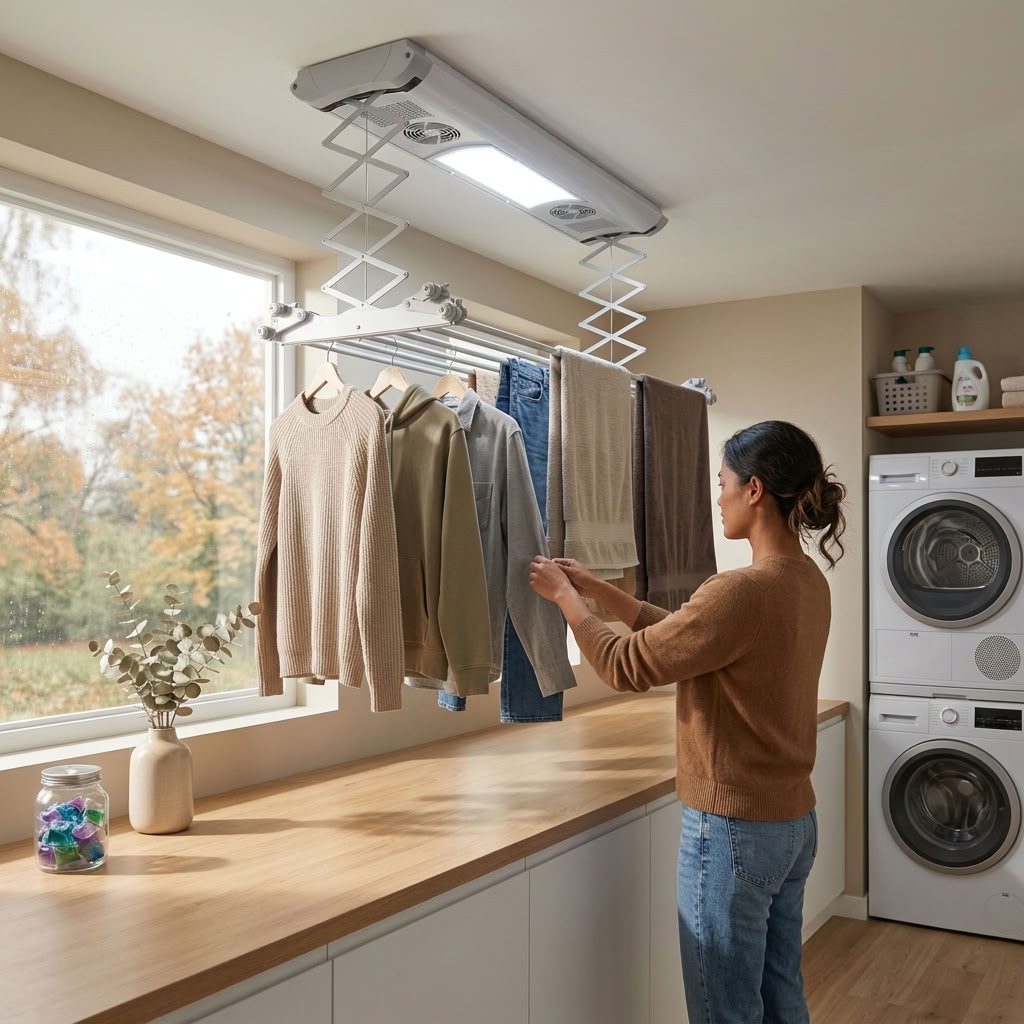
This principle applies to almost any drying arrangement. Stable rails, good weight distribution and enough separation between garments become increasingly important during wetter months. If you regularly dry large loads such as bed linen, sweatshirts or heavy towels, make sure the system provides enough usable length to avoid crowding the fabrics. Foxydry solutions offer different capacities for different household needs, from compact systems designed for a standard washing-machine load to larger ceiling-mounted models capable of supporting up to 35 kg.
Durable materials and reliable lifting mechanisms are equally important when the system is used frequently. Aluminium and steel structures, resistance to humid environments and components designed for repeated movement can help turn the drying area into a stable part of the laundry routine rather than another source of inconvenience.
Preparing the room for wetter laundry
Once the drying setup is ready, the room itself also needs to work effectively. Preparing for autumn means thinking beyond the rack and considering how wet garments, airflow and movement are managed from the moment damp items enter the home. A clearly organised area can reduce mess and make the daily routine easier to manage.
Creating a dedicated area for wet items
Rain changes the routine even before washing begins. Wet jackets, dripping umbrellas and damp shoes bring moisture indoors, while heavier washed garments may also retain more water than lightweight summer fabrics. Without a designated area, this moisture can easily spread across floors, furniture and other surfaces.
A simple solution is to create a specific zone for the wettest items. A drip tray or washable mat can help protect the floor beneath rain-soaked garments or footwear. This small adjustment makes the room easier to maintain and prevents wet items from gradually taking over several areas of the home.
Containment is particularly useful in compact homes, where coats, shoes and damp laundry can quickly migrate onto doors, radiators or hallway furniture. The Latvian small-space residential project highlights how preserving order and spatial balance can make bathroom-laundry areas more functional. The same principle can be applied at home by giving rainwear and damp garments a defined place.
Two simple habits can make this easier:
-
Keep the wettest garments in one designated area.
-
Remove standing water promptly to keep floors and surrounding surfaces dry.
Small routines like these help make the laundry area a planned part of the home rather than a temporary emergency zone every time the weather changes.
Improving warmth and air circulation
Once excess water is contained, airflow becomes one of the most important factors in indoor drying. Moisture needs to move away from the fabric and eventually leave the room. Guidance consistently points to the same challenges: limited ventilation, cool temperatures and high humidity can all slow evaporation and leave fabrics damp for longer.
Spacing garments apart is one of the simplest improvements. It allows air to move around sleeves, seams and thicker areas of fabric. External guidance also recommends removing items as soon as they are dry and maintaining a comfortable room temperature to support a more efficient drying cycle.
| Method | Description | Effectiveness |
|---|---|---|
| Natural ventilation | Open windows or use trickle vents, even briefly. | High — allows moist air to escape directly outside. |
| Dehumidifier | Appliance that actively removes moisture from the air. | High — very effective at reducing overall humidity and speeding up drying. |
| Heated airer | Electric rack that gently warms clothes. | Medium to high — speeds up evaporation but still requires ventilation to remove moist air. |
| Mechanical fans | A simple fan to circulate air around clothes. | Medium — improves air movement but does not remove moisture from the room. |
The same principle of improving airflow can be applied to ceiling-mounted drying systems. Foxydry Air, for example, integrates two fans designed to improve air circulation around the hanging garments and support the drying process. The fans use 44 W, while integrated LED lighting adds another practical function to the system. As with any indoor drying method, adequate room ventilation remains important because circulating air around the clothes does not remove moisture from the room itself.
“Although tempting to do so, drying clothes on radiators has many disadvantages. This practice leads to surplus moisture and condensation, potentially causing damp spots, discolouration, and mould growth. Additionally, hanging clothes over the top of your radiator will prevent it from effectively heating the room.”[HealthyHomes.org.uk]
For a typical room, the principles are straightforward. Avoid cramming clothes into corners, leave enough space between garments and use the best-ventilated area available. Opening a window briefly, where appropriate, can help moist air escape, while mechanical extraction can also support moisture control. Moderate warmth can help the drying process, but ventilation remains important as moisture leaves the fabrics.
When support, spacing and air circulation work together, heavier autumn laundry becomes easier to manage. Garments can dry more efficiently, the room remains more usable and the drying area is less likely to spread throughout the home. Preparing the setup before the weather changes means being ready for thicker fabrics and wetter days without sacrificing order or valuable living space.
- [The Conversation] Why drying clothes indoors could put your health at risk, The Conversation, February 2025.
- [Business Insider] The best clothes-drying racks for delicates, sweaters, and small spaces, Business Insider, January 2026.
- [HealthyHomes.org.uk] “Drying Clothes Wisely”, a publication by HealthyHomes.org.uk, April 2024.
- [Laundryheap] How to Dry Clothes in Winter and Avoid Smells, Laundryheap, November 2025.