

How to adapt your laundry routine from summer to autumn
As summer gives way to autumn, the easy rhythm of outdoor laundry starts to change. When the sun retreats and rain becomes the norm, your household routine faces a new challenge. Moving from outdoor to indoor drying involves more than simply bringing the clothes airer inside. It means adjusting when, where and how you manage each load.
Laundry organisation becomes more important as autumn weather makes outdoor drying less predictable. Summer habits rely on predictable weather; autumn routines must contend with interruptions, slower drying, and household clutter. When drying moves indoors, timing and placement become more important because laundry starts sharing space with everyday life. A single indoor load can release five litres of water vapour into your home, significantly impacting the environment.[Sensibo]
Real-life residential projects also show how important the drying area becomes when space is limited. A private residence project documented on 15 April 2026 linked laundry area optimisation to better order, functionality, airiness, and interior design coherence. Similarly, a Latvian residential project showed how, in compact homes, the drying solution can become an integral part of the room rather than an occasional piece of equipment.
Anticipating longer drying times
The first practical change is timing. A common friction point in autumn is the gap between fast wash cycles and slow indoor drying. Keeping the same washing rhythm as in summer can create a bottleneck: damp clothes linger, fresh loads have nowhere to go, and laundry spills into living areas.
Understanding the risks of indoor humidity
The Environmental Protection Agency (EPA) recommends keeping indoor humidity between 30% and 50%.[Sensibo] When levels consistently exceed 60%, mould growth risk increases significantly. A study by the Mackintosh Environmental Architecture Research Unit at the Glasgow School of Art found that 75% of monitored homes had humidity levels high enough to promote dust mite growth.[The Economic Times] Managing excess moisture is therefore an important part of indoor drying.
Think in terms of drying capacity, not just washing capacity. Space loads according to the room available and the time needed for moisture to dissipate. During wetter periods, try to reduce overlap between loads, give each one enough space and allow for the naturally slower rhythm of indoor drying.
While sources provide no seasonal performance figures for setting targets, they show that results improve with preparation. Managing the drying phase is key. In compact homes, preserving clear movement and free floor space improves usability—a crucial factor in autumn, when longer drying times make the process a recurring feature of daily life.

Managing the backlog of damp clothes
Accepting longer drying times brings the next issue: backlogs. Damp clothes accumulate when household systems have not adapted to seasonal changes. Effective laundry organisation treats loads as a sequence, not a single pile to be tackled at once.
A simple structure maintains control. Separate lighter garments from heavier ones, and handle bulky items with extra attention as they occupy more room for longer. Give delicates and urgent items their own place in the sequence to avoid mixing nearly dry pieces with freshly washed fabrics. This prevents damp clothes from lingering on chairs and radiators because no clear order was set.
In homes where the laundry area overlaps with a bathroom or corridor, this is critical. The Latvian residential case underlined the need for spatial fluidity in small apartments where every surface matters. There, an overloaded drying rack does more than slow laundry—it reduces comfort, interrupts movement, and makes the home feel smaller.
A laundry backlog quickly becomes a space problem too, especially when damp clothes begin occupying bathrooms, bedrooms or living areas.
Organising your laundry area for autumn
If a backlog is the symptom, the utility area is the solution. Preparing this space before the rainy season makes indoor drying more manageable and reduces daily improvisation. Even without a dedicated laundry room, sources show a clear principle: thoughtfully integrating the drying area improves functionality without sacrificing visual order.
Creating designated sorting stations
Indoor moisture control is also key. Drying clothes indoors releases moisture slowly, especially with dense or poorly spaced garments. Sources emphasise airiness and efficient design over emergency fixes. Choose a stable area for sorting, hanging, and folding to keep the process contained. Uncontrolled moisture can lead to musty smells and create an environment where allergens thrive.[Warrington Guardian]
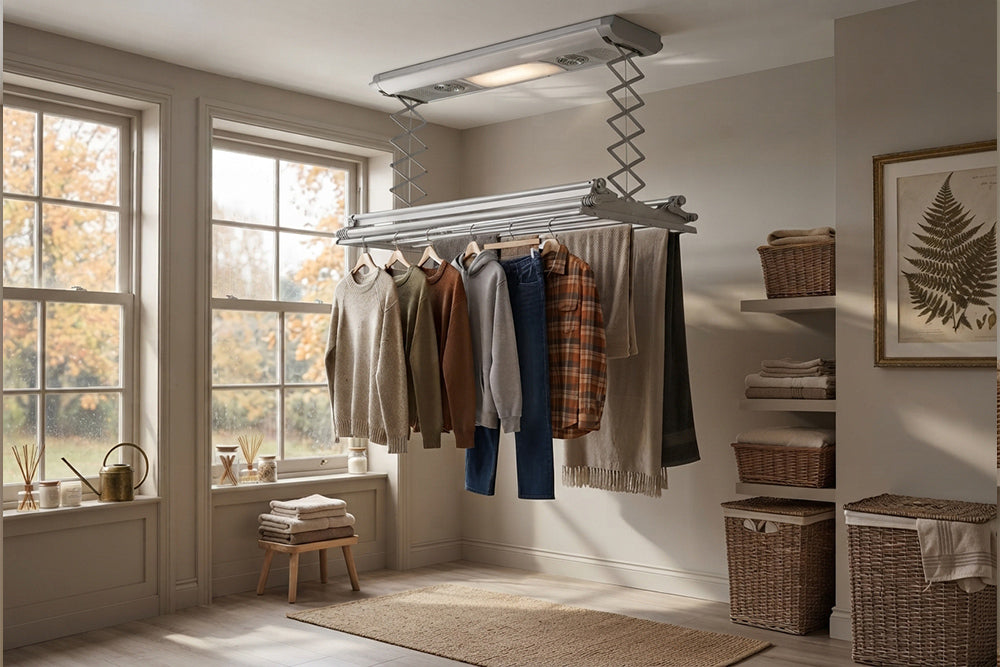
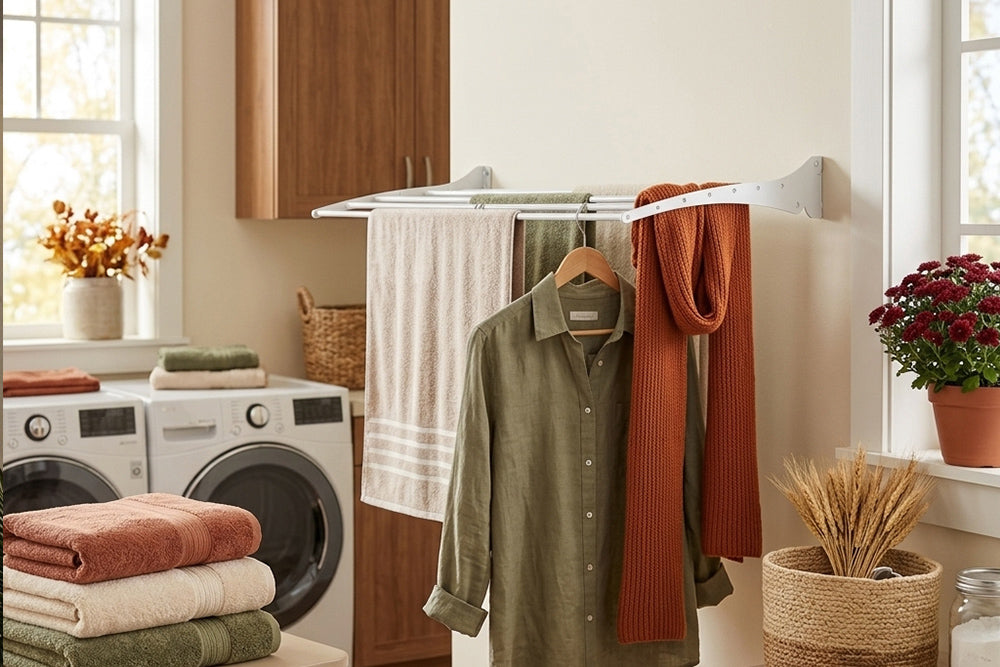
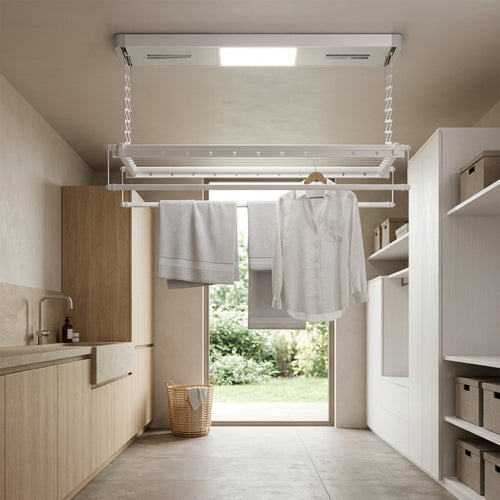
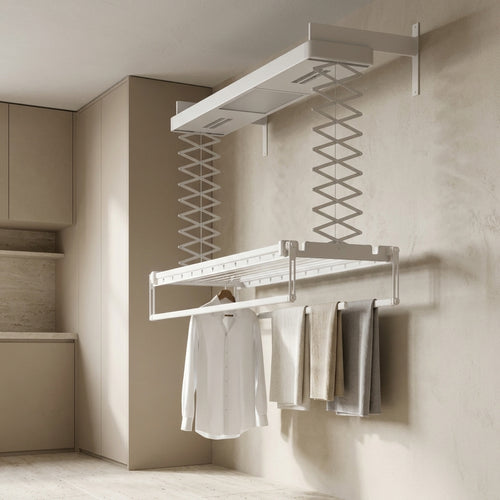
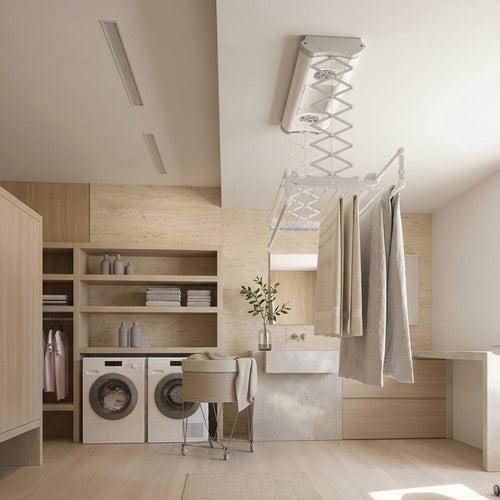
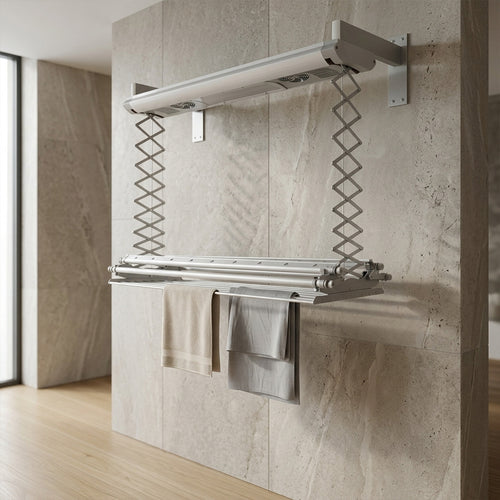
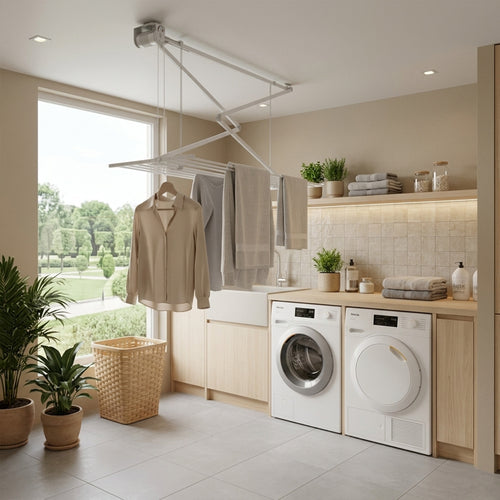
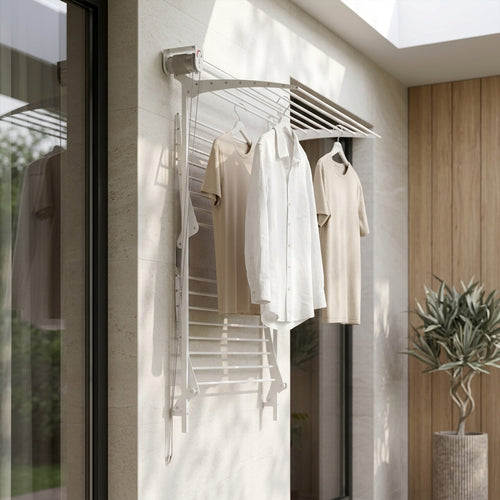
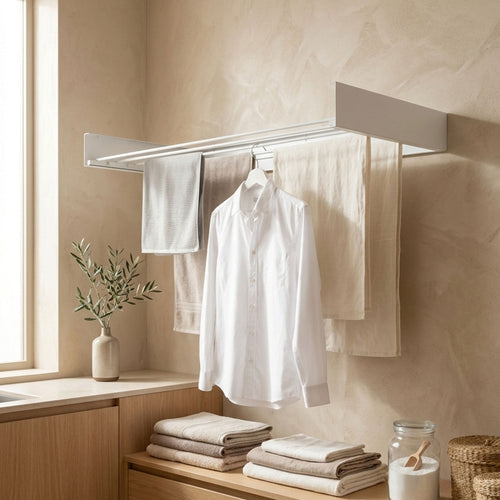
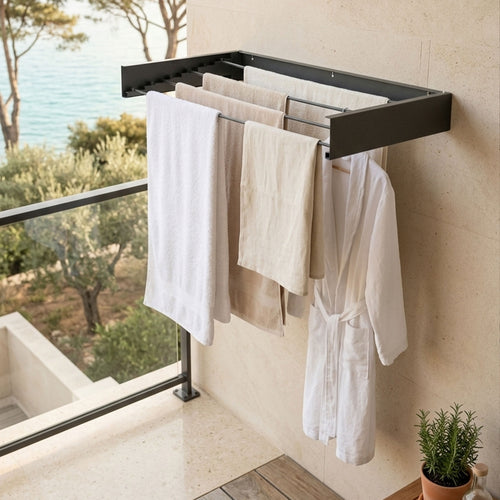
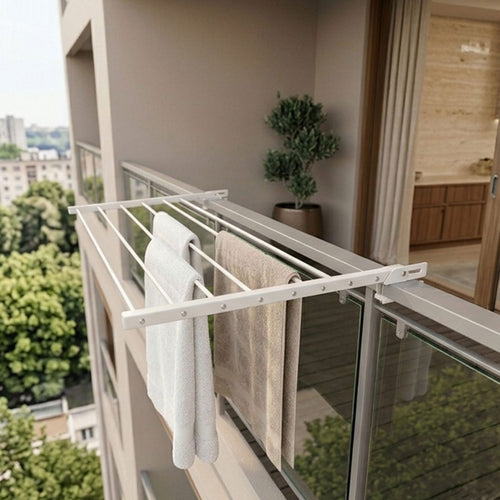
A space-saving drying system can make this transition easier by giving laundry a defined place without permanently occupying valuable floor space. Foxydry residential installations in Italy and Latvia show how wall- and ceiling-mounted solutions can free up floor space while keeping the laundry area organised. This principle is vital for maintaining calm during wetter months.
Once the space is defined, reduce weekly decision-making. A utility area is easier to use when each routine phase has a dedicated place. Create a simple flow—from dirty laundry to washing, drying, folding, and storage—instead of moving loads between improvised surfaces.
You do not need a large room to do this well. A compact setup can still include two clearly defined areas:
-
one container or zone for items waiting to be washed, divided if necessary between everyday loads and more delicate fabrics;
-
one clearly defined area for garments that are drying, nearly dry or ready to be folded.
This arrangement reduces visual clutter and the mental load of household management. It clarifies what to wash next, what needs more time, and what can be removed to free up drying space. The private-residence project of 15 April 2026 highlighted this benefit of optimisation: improved function alongside a more orderly, aesthetically consistent room.
In homes with multiple people handling laundry, designated stations simplify participation. This means less guesswork, fewer misplaced garments, and less risk of clean clothes ending up in the wrong basket. A calm system is built on such small, stable decisions.
Ensuring proper airflow around garments
With the area organised, airflow determines the system's efficiency. Clothes need space for moisture to disperse, not just to be hung up. Bunched garments dry slower, prolong dampness, and make the room less comfortable.
“While many advise drying clothes indoors, few sources clarify what genuinely accelerates the process. Our objective with these tests was straightforward: to demonstrate the actual behavior of airflow and humidity in a typical household, enabling families to make choices that save both time and money.”
- Chris Michael, CEO of Meaco
The simplest and most effective habit is leaving enough space between items to keep air moving. Some Foxydry models include integrated fans designed to improve air circulation around the garments and support the drying process. Good room ventilation remains important when drying laundry indoors, while a space-saving setup helps keep the area organised and free from unnecessary clutter.
| Drying Method | Approximate Drying Time | Estimated Cost |
|---|---|---|
| Natural Indoor Drying (unventilated) | 20+ hours | £0 (plus hidden heating costs) |
| Dehumidifier Only | 4-6 hours | ~28p |
| Dehumidifier + Cooling Fan | 2-3 hours | ~14p |
Proper spacing also helps keep the room more usable while the laundry is drying. Crowded laundry creates congestion, especially in a bathroom or compact apartment. A well-organised drying setup reduces this sense of congestion, particularly in bathrooms and small utility areas. This link between airiness and functionality appears repeatedly in both residential case studies and product catalogues.
Autumn laundry problems tend to build gradually: a few rainy days slow down drying, loads begin to overlap and temporary drying setups start taking over the home. Preparing early, organising each stage, and ensuring proper airflow are practical ways to keep the routine manageable. A little planning now can help keep laundry organised, preserve floor space and make the transition to indoor drying much easier.
Ready to make indoor drying easier this autumn?
Discover Foxydry space-saving drying solutions designed to keep your laundry organised without taking up valuable floor space.