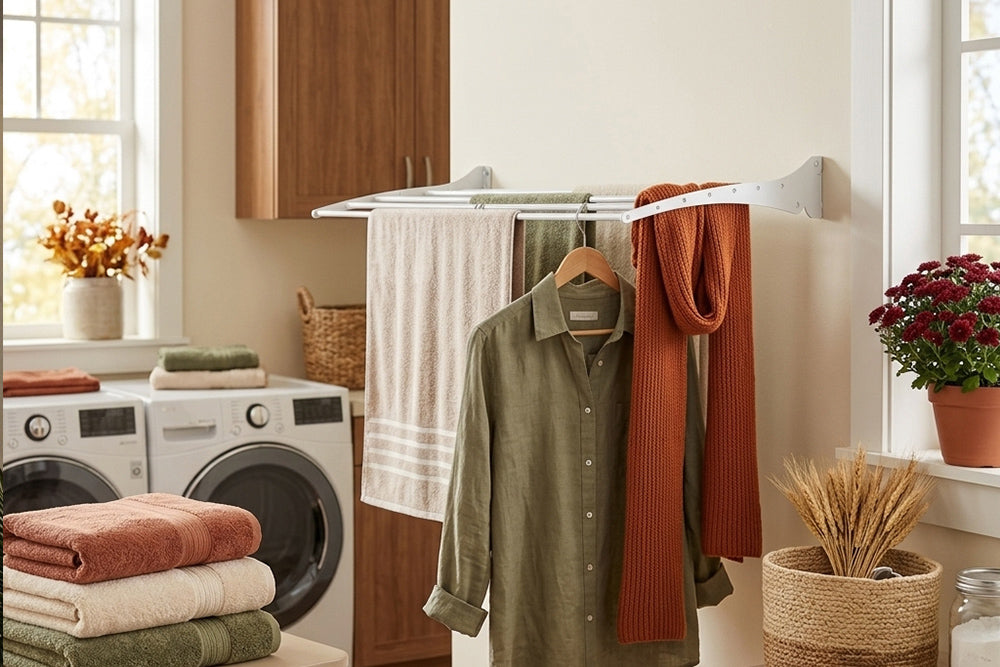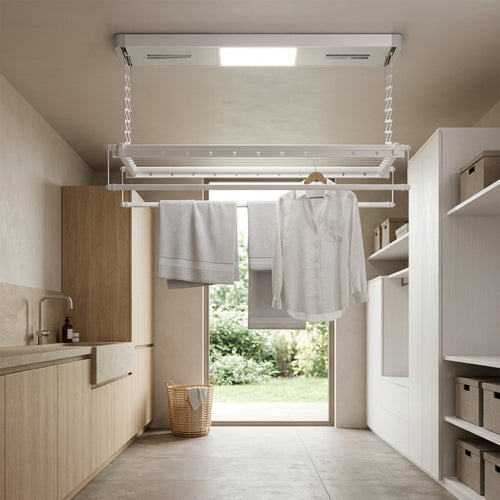
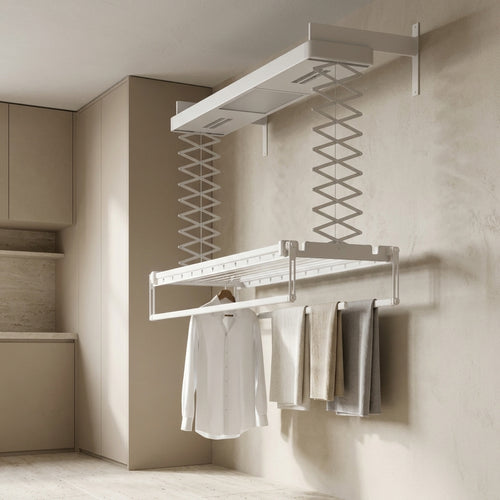
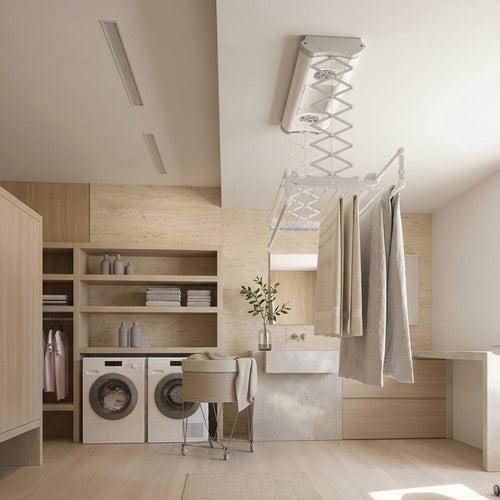

Evaluating drill-free outdoor accessories
Many find that their balcony is an underused area when cluttered with traditional, bulky laundry equipment. Apartment residents face a familiar summer struggle: managing laundry while keeping outdoor spaces tidy and free of permanent structural modifications.
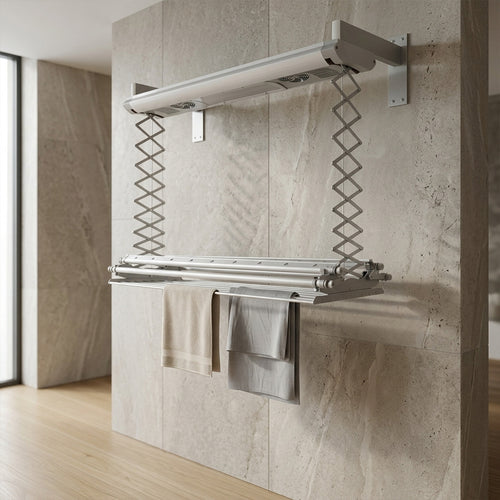
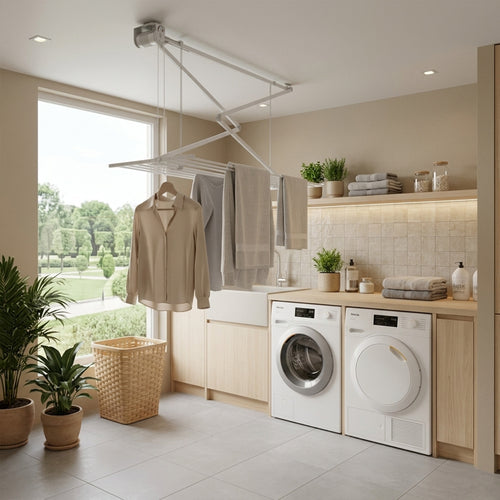
Available materials point to a clear shift away from bulky floor-standing airers toward systems that use walls, railings, and compact zones. Across the solutions gathered by Foxydry, the focus is on practical outdoor space-saving tools that remain discreet when not in use.
- Drill-free: Designed to be used without drilling holes in masonry, external walls, tiles, or balcony structures, reducing the risk of tenancy deposit deductions. Retractable: A system that extends when needed and pulls back into a compact housing between laundry loads. Collapsible: A frame that folds flat after use, allowing the balcony to switch between laundry care and leisure activities. Load capacity: The maximum weight a product supports when laundry is evenly distributed, which is crucial since wet textiles are heavier than they look.
Traditional floor models constantly occupy space, whereas modern alternatives rely on folding, retracting, or vertical movement. Materials like aluminium, anodised aluminium, stainless steel, and powder-coated metal provide crucial outdoor resistance to rust, rain, and salt air.
| Feature to compare | Why it matters on a balcony | What to check before buying |
|---|---|---|
| Installation method |
Non-permanent fixing protects walls and railings from damage |
Confirm if the system clamps, hooks, rests on a rail, or uses supports |
| Drying length |
Linear metres determine how many garments can be spaced properly |
Compare the stated drying metres with your typical wash load |
| Maximum load |
Wet laundry is heavy, especially towels, jeans, and bedding |
Look for the stated kilogram rating and distribute weight evenly |
| Storage profile |
Balconies serve as both service areas and living spaces |
Measure how far the airer projects when open versus closed |
| Outdoor material |
Sun, rain, and salt air can rapidly damage untreated metals |
Prioritise aluminium, stainless steel, or powder-coated finishes |
Why renters prefer non-permanent fixtures
Non-permanent fixtures protect property surfaces, making them highly popular among renters and homeowners who want to avoid altering finished balcony walls or masonry.
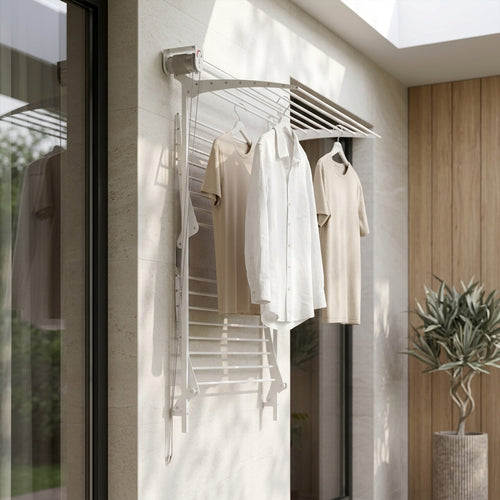
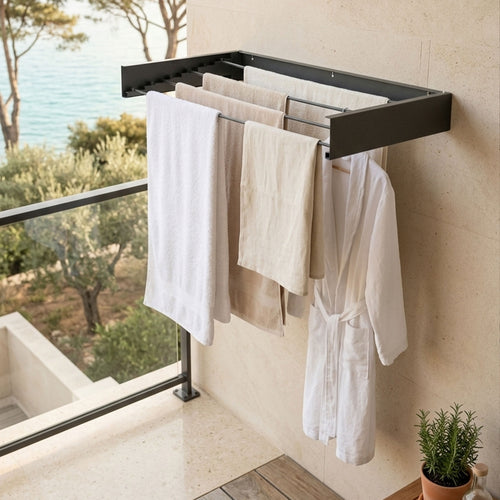
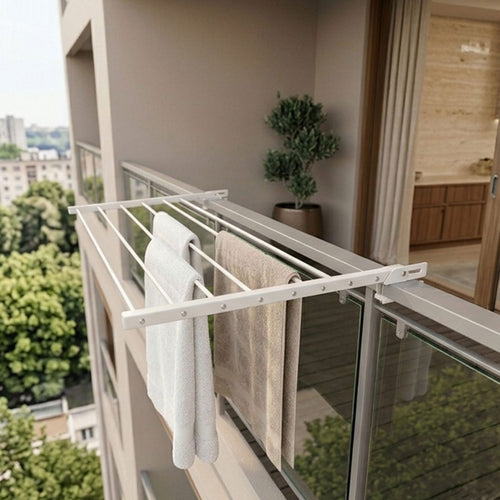
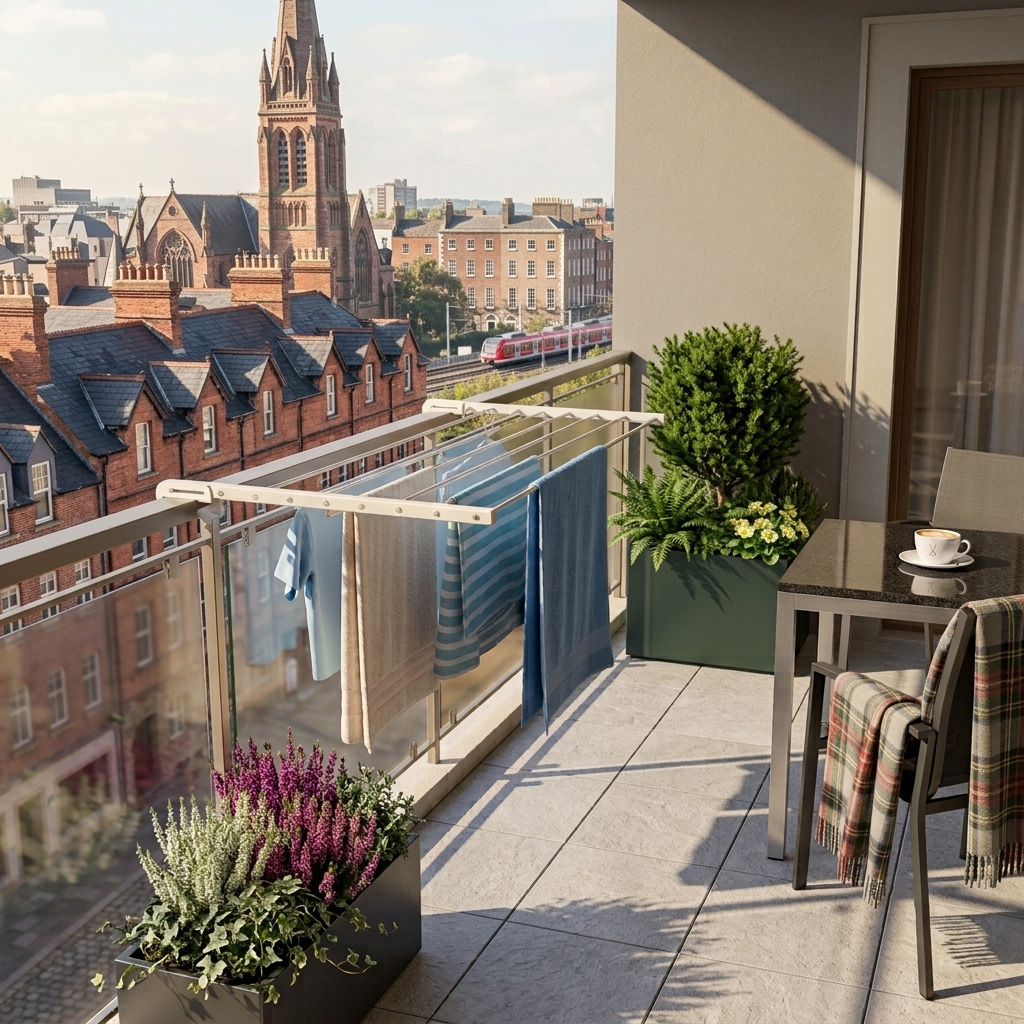
Certain balcony solutions install securely without tools, offering sizes from 62 cm to 202 cm and supporting up to 15 kg when evenly loaded. Available in white, anthracite, and brown, they blend into building facades. Other retractable and collapsible models fold flat; weight capacities range from 10 kg for compact folding models, to 25 kg for retractable ones, and over 30 kg for large wall-mounted systems.
Check your tenancy agreement or building handbook before attaching anything to railings.
Choose a colour that blends with balcony rails or facade tones to reduce street-level visibility.
Keep proof of product specifications, particularly outdoor rating and load capacity.
Avoid fixing points that scratch painted metal, mark render, or stress glass panels.
Keep laundry below railing height if the balcony is shared or heavily overlooked.
Keeping your balcony tidy and functional
Good drying equipment should recover usable space. Temporary racks, folding units, and retractable lines are replacing classic floor airers that block walkways.
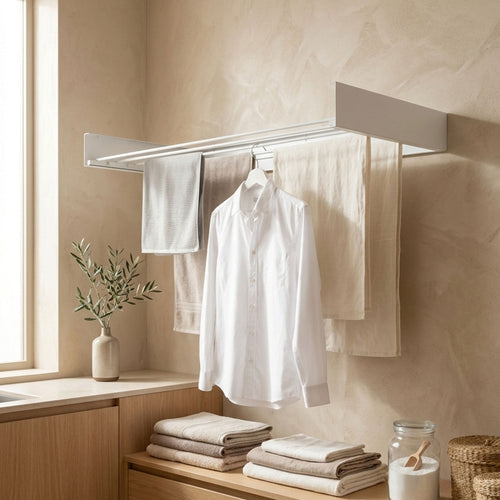
Folding wall models range from 60 cm to 116 cm (supporting up to 10 kg), retractable versions span 71 cm to 101 cm, and balcony-specific formats reach up to 202 cm.
| Balcony situation | Most suitable drying approach | Reason |
|---|---|---|
| Very narrow balcony | Railing-mounted or fold-flat format | Keeps the central walkway open and avoids tripping over floor legs. |
| Balcony used for seating | Retractable line or collapsible rack | Allows the space to switch back to leisure use once laundry is dry. |
| Visible facade | Discreet colour and low-profile design | Reduces visual clutter and helps the airer blend with the exterior. |
| Family laundry loads | Higher linear drying space and stronger load rating | Prevents overcrowding, which slows drying and causes creasing. |
| Coastal or humid location | Aluminium, stainless steel or powder-coated metal | Improves resistance to moisture, corrosion and salt air. |
When tools store flat, outdoor spaces look like part of the home rather than a service corner. Foxydry’s space-saving drying solutions demonstrate how collapsible formats reduce everyday clutter without compromising on load capacity.
Making the most of late summer sunshine
The Royal Meteorological Society notes that moving air matters as much as sun for drying laundry outside, making covered, open-sided spaces highly effective.
Temporary racks are ideal for handling peak summer laundry loads without turning the balcony into a permanent utility zone. Built with rust-resistant finishes, these solutions endure year-round use but pack away completely once the washing is done.
| Condition | Drying impact | Balcony adjustment |
|---|---|---|
| Light breeze | Speeds evaporation and helps reduce stiffness. | Space garments apart and peg lightweight items securely. |
| Direct sun | Useful for whites, but may fade dark colours over time. | Turn dark garments inside out or place them in partial shade. |
| High humidity | Slows drying and can leave laundry smelling stale. | Use the airer only when airflow is good, or finish indoors with ventilation. |
| Pollen season | Damp textiles can collect pollen from the air. | Check local pollen levels if anyone in the household has allergies. |
| Strong wind | Can lift garments, strain a rack or blow items away. | Reduce the load, use pegs and avoid large sheets acting as sails. |
Setting up a temporary drying station
Favour positions that keep the floor clear. Vertical wall-mounted systems, retractable lines, and railing designs all preserve movement in narrow outdoor areas.
Measure balcony width at the exact height the airer will sit, accounting for pipes or ledges.
Measure depth with the balcony door fully open, not just closed.
Leave a gap for airflow behind garments; fabric pressed against walls or glass dries slowly.
Use the washing machine’s maximum spin setting for towels and cottons to reduce water weight.
Separate heavy garments from light ones to keep the temporary rack balanced.
Place long items where they will not drip onto lower apartments or the street.
Descriptions show that modern systems deploy rapidly; user reviews note installation can be completed in minutes with clear guidance, tidying away neatly afterward.
One balcony model features 8 rods providing either 12 or 16 linear metres of drying space (depending on the source reference) and supports up to 15 kg.
| Laundry type | Best hanging method | Why it helps |
|---|---|---|
| T-shirts and shirts | Hang on rods with space between items, or use hangers where possible. | Preserves shape and improves airflow around the shoulders and sleeves. |
| Jeans and trousers | Hang inside out from the waistband or belt loops. | Thick seams dry more evenly when air can move through the garment. |
| Towels | Spread fully rather than folding over one bar. | Folded towels can take much longer to dry because the inner layers stay damp. |
| Sheets | Drape in a zigzag across several rods if a full line is not available. | Prevents fabric-on-fabric contact and exposes more surface area. |
| Wool or heavy knits | Dry flat on a supported surface where the care label allows air drying. | Wet knitwear can stretch if it hangs from a narrow bar. |
Storing equipment when not in use
Storage should be fast and intuitive. Modern systems fold flat against the wall, close with a clip, or retract completely out of sight.
Durability relies on materials like aluminium and stainless steel. Review scores confirm high satisfaction: 4.8/5 (213 reviews) for the balcony solution, 4.7/5 (146 reviews) for the folding wall model, and 4.7/5 (60 reviews) for the retractable option.
After each use: Close or retract the rack only when completely dry to prevent trapping moisture.
Weekly in summer: Wipe rods to clean off urban residue, dust, and pollen before hanging light clothes.
After windy weather: Check clamps, brackets, and hooks before loading the next wash.
Before winter: Clean the frame, dry thoroughly, and store removable accessories indoors.
Shared buildings: Store pegs and covers away to keep the exterior facade looking uncluttered.
| Decision question | If the answer is yes | If the answer is no |
|---|---|---|
| Do you regularly wash towels or bedding? | Prioritise higher load capacity and more drying metres. | A compact foldable or retractable model may be enough. |
| Is the balcony visible from the street? | Choose a discreet colour and a system that stores flat. | You can focus more heavily on capacity and convenience. |
| Do you rent the property? | Avoid drilling and check written rules before attaching anything externally. | You may still prefer reversible options to protect finishes. |
| Is the balcony exposed to rain or salt air? | Look for outdoor-rated aluminium, stainless steel or coated metal. | Durability still matters, but corrosion pressure is lower. |
| Do you need the balcony for seating? | Choose a rack that folds, retracts or clears the floor quickly. | A larger drying setup may be acceptable if space is mainly functional. |
For a broader view of adaptable outdoor setups, Foxydry also gathers several balcony drying solutions and additional wall-mounted options in its article on outdoor wall-mounted clotheslines.