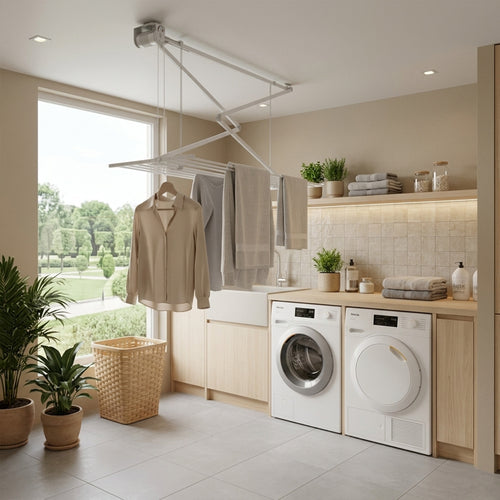


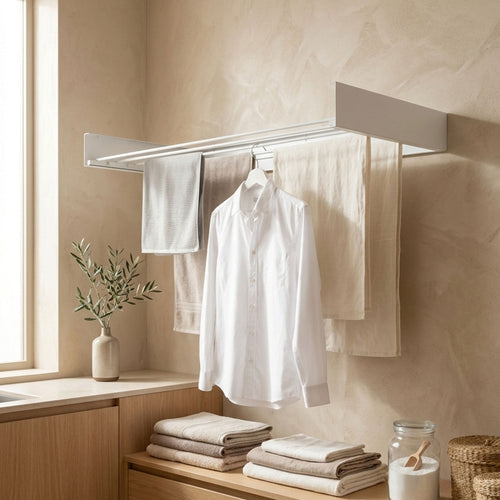
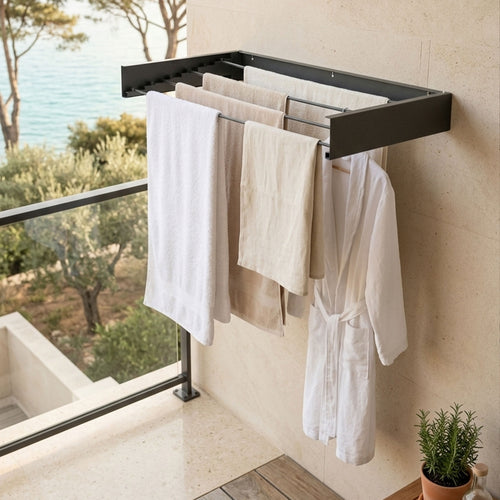
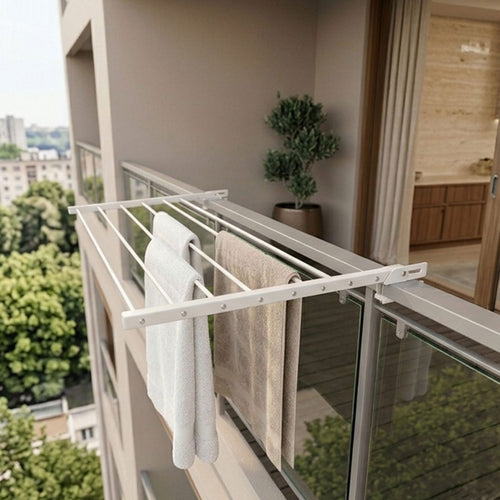

As autumn temperatures drop, drying laundry indoors becomes part of the routine for many households. While this is perfectly manageable, wet textiles release moisture into the room and, when ventilation is limited, humidity can build up more easily. Overlooking this moisture is one of the main mistakes to avoid when drying clothes indoors, particularly during cooler months when windows tend to stay closed for longer.
Understanding how moisture behaves indoors is an important part of autumn home care. A well-organised drying area should not only provide enough space for clothes, but also allow air to circulate around them and make it easier to ventilate the room while they dry.
Identifying poor indoor drying habits
This becomes especially relevant in autumn, when lower outdoor temperatures mean laundry is more often dried inside. The issue is not indoor drying itself, but how the moisture released by wet textiles is managed. Research reported in The Economic Times refers to studies indicating that a single wash load can release around 2 litres of water into the indoor environment, with estimates varying according to the amount and type of laundry.[The Economic Times]
The same research highlights how indoor laundry can become a significant source of moisture during colder months, particularly in homes where ventilation is limited.[The Economic Times]
Damp and mould can affect indoor health
UK government guidance explains that damp and mould can produce allergens, irritants and other substances that may affect health. The main concerns include:[GOV. UK]
Respiratory symptoms such as coughing, wheezing and shortness of breath.
Increased risk of respiratory infections.
Development or worsening of allergic conditions such as rhinitis and asthma.
Effects on wellbeing associated with poor housing conditions and persistent damp.
For households doing several loads each week, the amount of moisture introduced into the home can therefore become significant. Without sufficient ventilation, this moisture may contribute to condensation, slower drying and persistent damp smells.
Placing wet garments directly on radiators
Drying wet clothes directly on radiators can appear convenient because the fabric warms quickly. However, the moisture released by the garments still enters the surrounding room and needs to be removed through ventilation or other forms of moisture control.
There is also a practical drawback: garments placed directly on a radiator may dry unevenly. Folded sections can remain damp while the exposed surface becomes warm, and restricted airflow around the fabric can slow complete drying.
Research reported in 2026 also drew attention to another aspect of indoor laundry: airborne microfibres released while clothes dry. The findings suggest that indoor drying may contribute to airborne microplastic fibres, adding another reason to pay attention to ventilation in rooms used for laundry.[The Economic Times]
Effective indoor drying therefore depends on more than heat. Clothes need space around them, air needs to move between the fabrics, and the moisture released into the room needs a way to escape.
Ignoring the importance of ventilation
Once moisture starts evaporating from wet textiles, ventilation becomes particularly important. In small bathrooms, utility areas or compact rooms, humid air can stagnate if there is little air exchange.
The World Health Organization guideline on dampness and mould highlights the importance of preventing persistent damp conditions inside buildings. As a practical rule, indoor relative humidity is often kept within a moderate range, avoiding prolonged periods of high humidity that can favour condensation and mould growth.
Ventilation does not necessarily mean leaving windows open for hours. Short, deliberate periods of air exchange can help remove moisture while limiting heat loss. Guidance on indoor drying commonly recommends opening windows for a short period or creating cross ventilation where possible.[Washtower]
Drying time is another useful signal. If towels, jeans or other thick fabrics remain damp for a long period, the room may not have enough airflow or ventilation. Slow drying can also contribute to the musty smell sometimes associated with laundry left damp for too long.
Protecting your home from excess moisture
When moisture released by laundry cannot leave the room efficiently, it tends to remain in the indoor air or condense on colder surfaces. This is particularly noticeable in autumn, when windows, external walls and poorly insulated areas begin to cool.
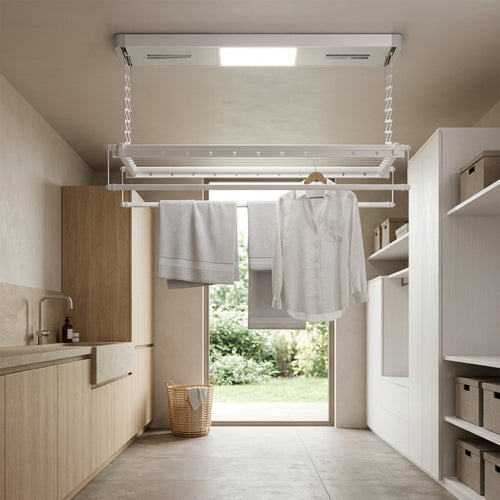
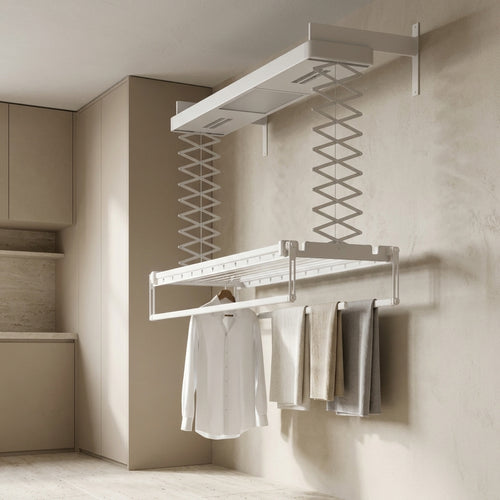
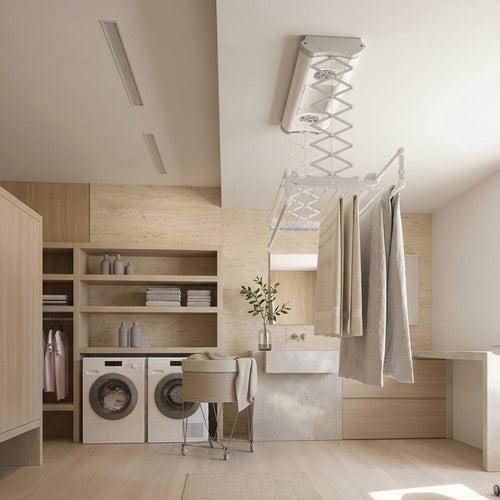
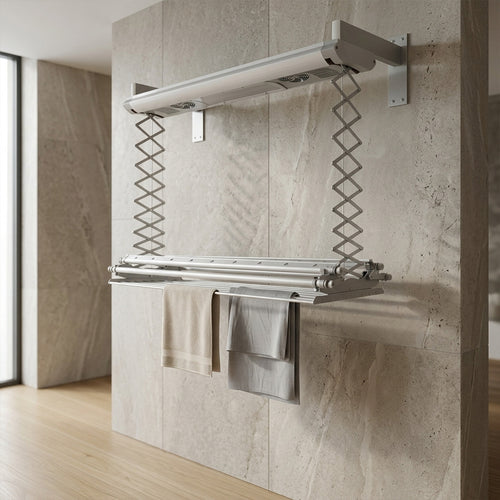
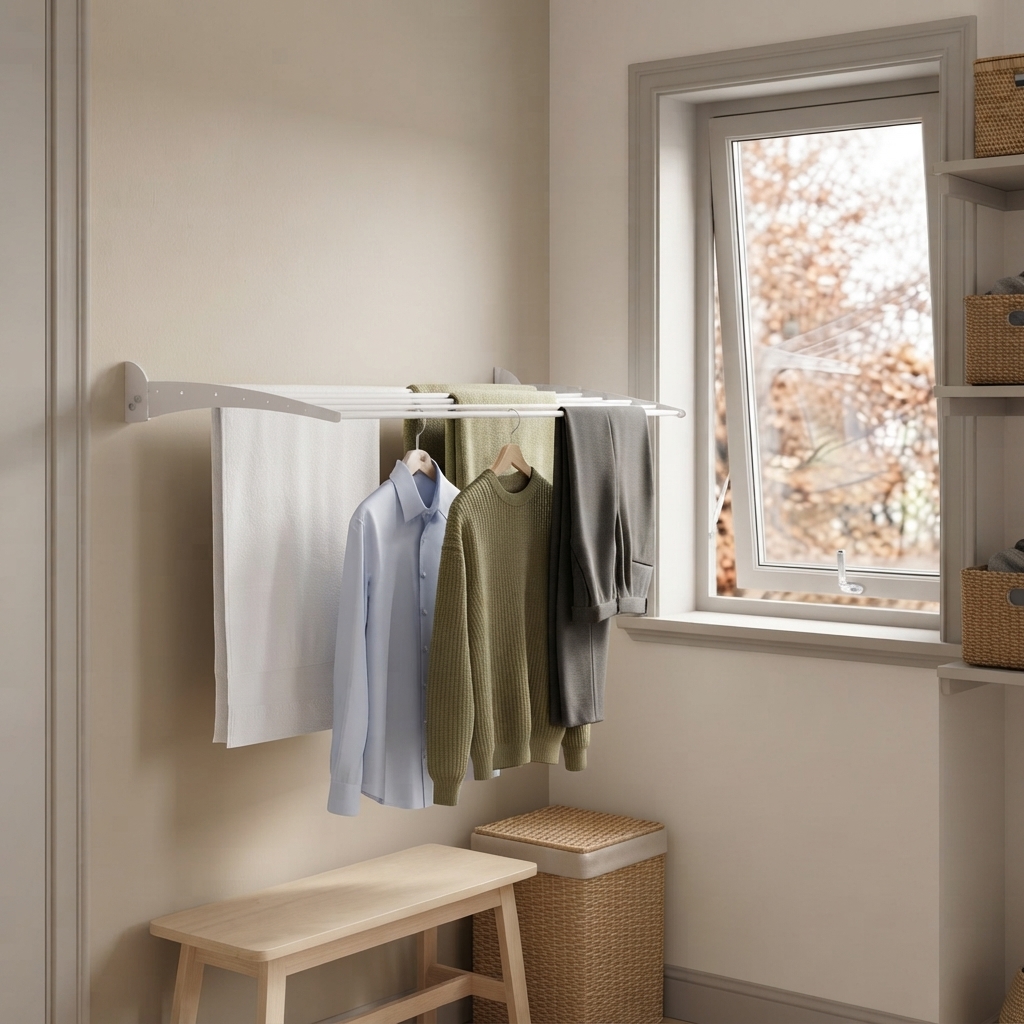
Space-saving wall- and ceiling-mounted drying systems can help organise the drying area without occupying the floor. Keeping the area around the laundry clear also makes it easier to leave sufficient space between garments and avoid blocking doors, vents or other paths through which air circulates.
Signs that a room is struggling with excess moisture can include persistent damp smells, frequent condensation on windows, peeling paint, swollen timber around frames or dark spots developing in colder corners. These signs should not be ignored, especially when they appear repeatedly.
Understanding how condensation forms
Condensation occurs when warm, moisture-laden indoor air comes into contact with a colder surface. As the air cools, some of the water vapour changes into liquid water. During autumn and winter, windows, external walls and uninsulated corners are often the first surfaces where this becomes visible.
Who is more vulnerable to damp and mould?
UK public health guidance identifies several groups that can be more susceptible to the effects of damp and mould:[GOV. UK]
People with pre-existing respiratory or allergic conditions.
Individuals with a weakened immune system.
Pregnant women.
Children and young people.
Older adults.
Persistent high humidity creates conditions in which mould and dust mites can become more likely. Common indoor moulds include species from genera such as Cladosporium, Aspergillus and Penicillium.[Medical News Today]
The important point is not a single brief rise in humidity, but repeated or prolonged damp conditions. Frequent condensation on windows, particularly during the colder part of the year, can be a useful warning that the room needs better moisture management.
Choosing the right place for your drying station
Understanding condensation also makes the position of the drying area more important. Whenever possible, choose a room where air can be exchanged easily and where garments can be spaced apart rather than packed tightly together.
Thicker fabrics such as towels, jeans and knitwear should be fully opened rather than folded over several times. Leaving space between garments allows air to circulate around more of the fabric surface and helps the moisture evaporate more evenly.
Best practices for indoor drying
A combined approach can make indoor laundry drying more manageable.[Washtower][The Economic Times]
Improve ventilation: Create short periods of air exchange and, where possible, open windows on opposite sides to encourage cross ventilation.
Use a dehumidifier when necessary: In rooms where ventilation is difficult, a dehumidifier can help remove moisture from the air.
Remove more water before drying: An additional spin cycle can reduce the amount of moisture left in the textiles.
Space clothes out: Avoid overcrowding the drying rack so air can circulate around each item.
Choose the right room: Prefer a utility room, a bathroom with effective ventilation or another room where moisture can be removed efficiently.
Placement also means avoiding areas where humid air is likely to remain trapped. Tight corners, spaces immediately behind furniture and poorly ventilated areas next to cold external walls are less suitable for drying laundry.
A structured drying area can make this easier. Wall- and ceiling-mounted systems keep the floor clear and allow the laundry to be positioned in a defined part of the room, making it simpler to maintain space between garments and keep doors, windows and ventilation paths unobstructed.
This is particularly useful during autumn home care, when small changes in routine can make indoor drying much more manageable. Better garment spacing, a suitable room and short periods of deliberate ventilation can all help control moisture while keeping the home organised.
- [The Economic Times] “Drying Clothes Indoors Damage Your Home’s Air Quality.” March 2026.
- [GOV. UK] “Understanding and addressing the health risks of damp and mould in the home.” April 2026.
- [Medical News Today] “Mould in the home and how it can affect health.” April 2024.
- [Washtower] “A Comprehensive Guide to Drying Laundry: Indoors and Out.” December 2024.