

Preparing your laundry space for autumn
As late summer begins to give way to shorter days and more changeable weather, your home naturally starts to shift with the season. Autumn changes the rhythm of your daily household chores, especially in the laundry room. With less predictable weather, cooler air and sudden showers, clothes can stay damp for longer and floor racks can begin to block the room.
A better laundry layout helps you keep the room tidy and easier to maintain. In practical terms, autumn home preparation starts with reviewing movement, storage, and ventilation.
Reorganising shelves for seasonal items
When detergents, baskets, and tools compete for the same spots, the room loses clarity. One useful reset is to group items by how often you use them, keeping daily products at a comfortable height.
Even a compact setup works well when each element has a defined role. As detailed in Foxydry’s guide on how to organise a laundry area, a basic functional arrangement (50 cm sink, 60 cm washing machine, 30 cm vertical cabinet) requires a total length of 1.40 m, plus 60 cm of clearance. If you add a tumble dryer, baskets, and an ironing cupboard, the total rises to 2.70 m, or 2.10 m when the dryer is stacked
| Storage level | Best use in autumn | Why it works |
|---|---|---|
| Eye to waist height | Daily detergent, stain remover, laundry bags, pegs, lint roller and frequently used baskets | Reduces bending and keeps the wash cycle moving quickly |
| High shelves or top cabinets | Refills, spare soft furnishings, waterproofing products and occasional care items | Protects prime shelf space from seasonal clutter |
| Closed cupboards | Bulky bottles, cleaning products, pet supplies and less attractive packaging | Controls visual clutter and keeps the room calmer |
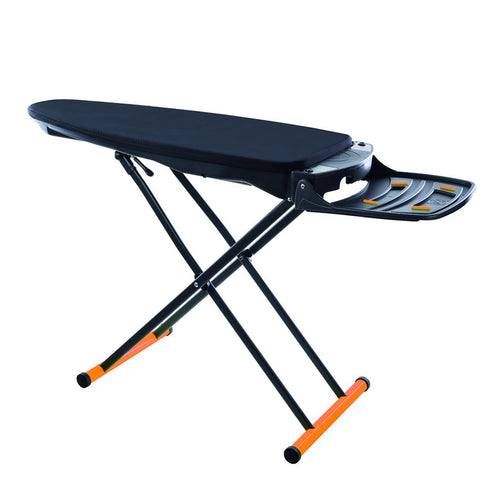
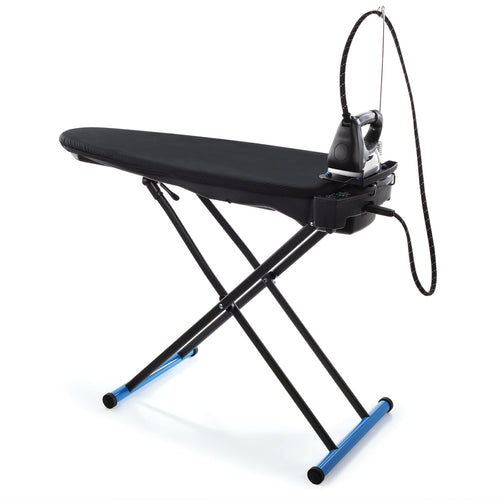
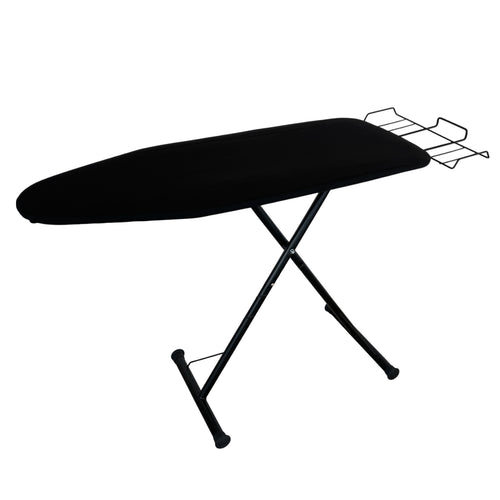
| Vertical side storage | Ironing board, mop, broom, drying accessories and folding hooks | Uses height instead of narrowing the floor path |
| Under-counter space | Removable laundry baskets or sorting bins | Prevents baskets from blocking appliance doors and walkways |
Those measurements make one point very clear: shelf space should support active use, not become generic storage. Open shelving can make the room feel visually lighter, while concealed units and sliding-door cabinets can help hide secondary items. In both cases, the goal is the same: keep the room readable at a glance, protect easy access to essentials and avoid letting heavier seasonal textiles dominate the most practical zones.
-
Keep one small tray for daily products instead of spreading bottles across the worktop.
-
Store refills behind closed doors so the room does not feel like a stock cupboard.
-
Leave a clear landing surface near the washing machine for wet items and folded loads.
-
Check that cabinet doors, appliance doors, and room doors can open at the same time.
Decluttering before the cold weather starts
Autumn is a logical moment to remove empty bottles, expired detergents, and damaged accessories. Clearing surfaces and freeing the floor immediately reveals better positions for storage, lighting, and drying equipment.
| Item to review | Keep if | Move, recycle or discard if |
|---|---|---|
| Detergents and additives | You use them monthly and they suit current fabrics | They are duplicates, nearly empty, or leaking |
| Laundry baskets | They fit under counters or stack neatly | They block doors or sit permanently in walkways |
| Drying accessories | They increase airflow or protect delicate garments | They compress clothes together or occupy the floor |
| Spare textiles | They are clean, dry and used during the season | They smell musty, are never used or belong in bedroom storage |
-
Check extractor fans before cold weather makes window opening less appealing.
-
Clean dust from vents, fan covers and any grille close to the drying area.
-
Make sure wall units do not block airflow around wet clothes.
-
Add task lighting under cabinets if the main ceiling light leaves the worktop in shadow.
-
Leave a small gap behind tall furniture placed on external walls to reduce trapped moisture.
Smart additions for indoor fabric care
Autumn laundry is more frequent indoors, bulkier, and slower to dry. The key is to create a dedicated drying area that supports airflow, keeps garments spaced properly, and does not take over the room.
Slow drying is often caused by still, humid air and poor positioning. In typical indoor conditions, drying times range from 4–8 hours for light garments to 12–24 hours for heavier items, depending on airflow and humidity.
| Relative humidity | What it means for laundry | Recommended response |
|---|---|---|
| 40–55% | Comfortable range for drying and general indoor air | Keep the current routine and maintain airflow |
| 55–65% | Drying slows and condensation may appear on cold glass | Open windows briefly, use extraction, and increase spacing |
| 65–75% | Mould risk rises, especially in corners and behind furniture | Reduce load size or add dehumidification |
| Above 75% | High-risk drying conditions; clothes remain damp too long | Stop drying in that room unless moisture is actively removed |
Making room for heavier garments
Towels, sweatshirts, and blankets hold more moisture and need more space around them. If they are crowded onto a small rack, air cannot circulate freely and unpleasant smells become more likely.
-
Hang jeans and sweatshirts from their strongest seams so the thickest parts are exposed to moving air.
-
Separate towels across different rails rather than folding several over one bar.
-
Turn hoodies inside out halfway through drying so the hood, cuffs and waistband do not stay damp.
-
Dry bedding in a wider area or overhead position so fabric does not fold back on itself.
-
Keep wet clothes away from external wall corners, uninsulated surfaces and window frames with persistent condensation.
| Fabric type | Autumn drying challenge | Better indoor method |
|---|---|---|
| Towels | High water retention and slow evaporation | Use an extra spin if suitable, shake out fibres and leave wide spacing |
| Jeans | Thick seams and waistband stay damp | Hang from the waistband with air on both sides |
| Hoodies | Hoods, cuffs and pockets trap moisture | Open the garment fully and reposition halfway through drying |
| Coats | Outer layers can block airflow to linings | Use a hanger in a ventilated position and avoid direct radiator contact |
| Bedding | Large sheets overlap and block circulation | Use a high, wide drying position or separate loads into smaller batches |
A rack that handles summer tops may struggle with autumn volume. Foxydry’s resource on indoor drying describes a dedicated drying zone as a practical way to gain faster drying, better airflow, fresher clothes, and less visual clutter. Furthermore, Foxydry’s indoor drying solutions for autumn and winter expand on how spacing, airflow, and positioning can keep the room under control.
Utilising clever overhead solutions
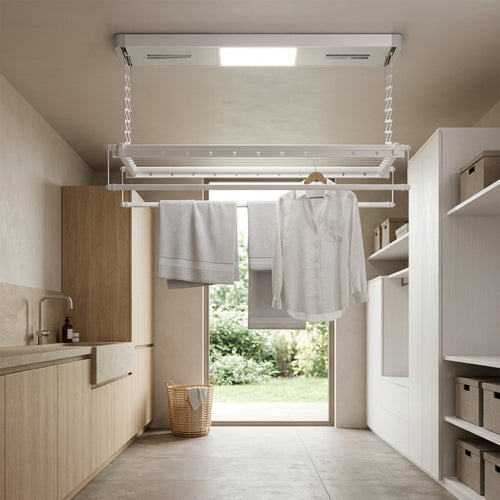
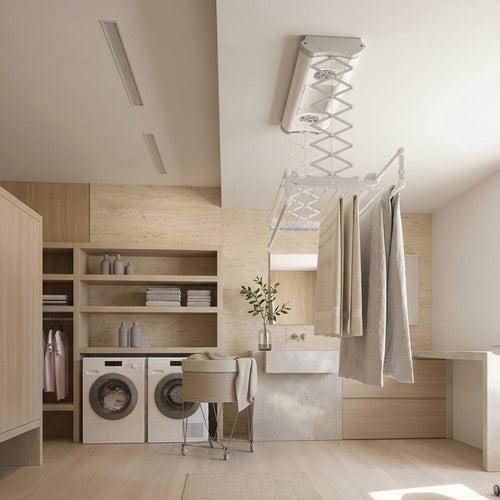
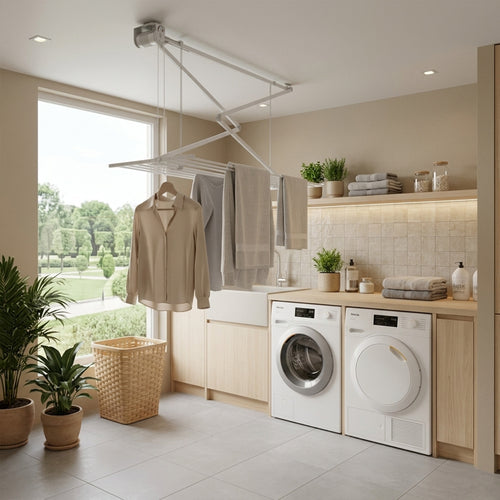
Raising laundry keeps circulation free, reduces visual clutter, and uses the upper part of the home where air tends to move more naturally.
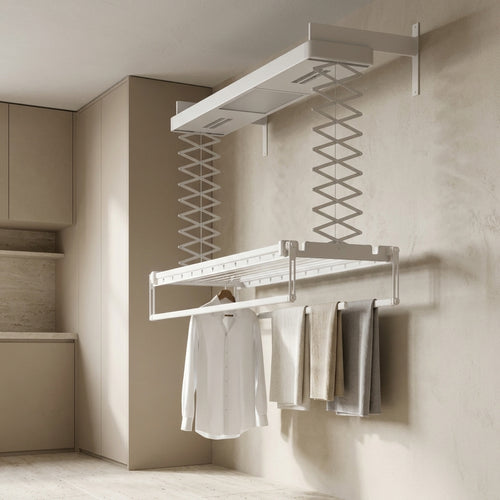
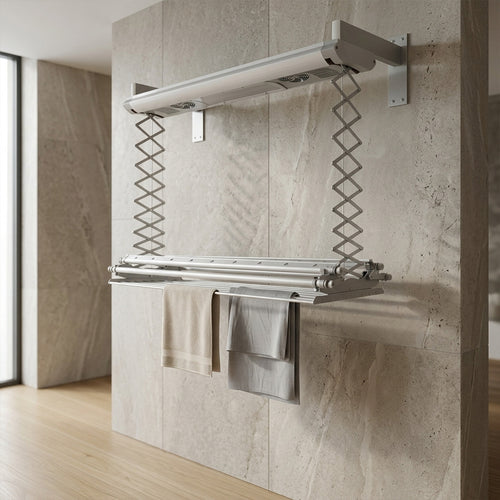
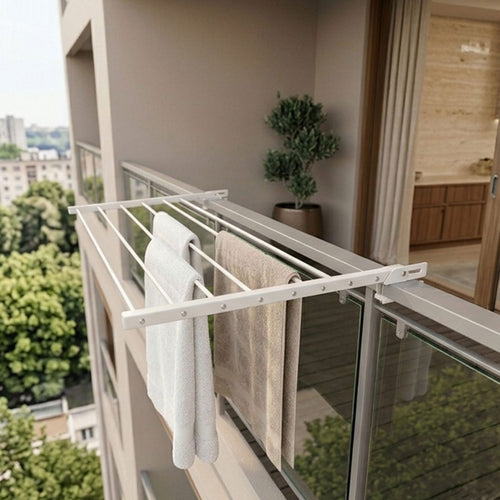
Foxydry’s project materials describe solutions designed for walls and ceilings so drying capacity can be added without permanently occupying floor area. Case studies highlight ceiling-mounted systems chosen to recover movement and reduce visual noise in compact home environments.
| Solution type | Best for | Key autumn benefit |
|---|---|---|
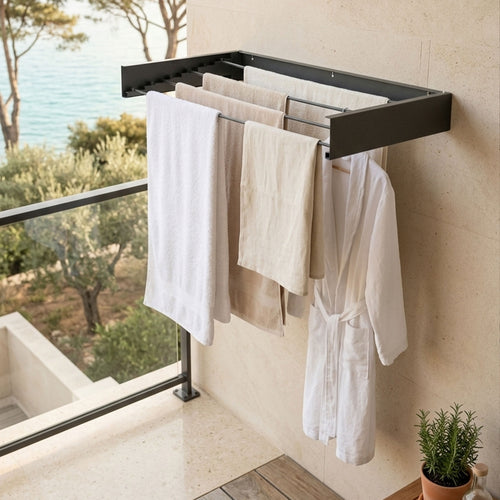
| Ceiling-mounted drying system | Utility rooms, bathrooms, balconies and compact homes | Preserves floor space while giving heavier garments more air exposure |
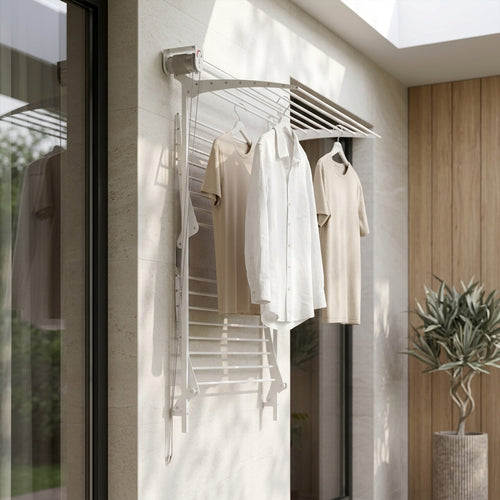
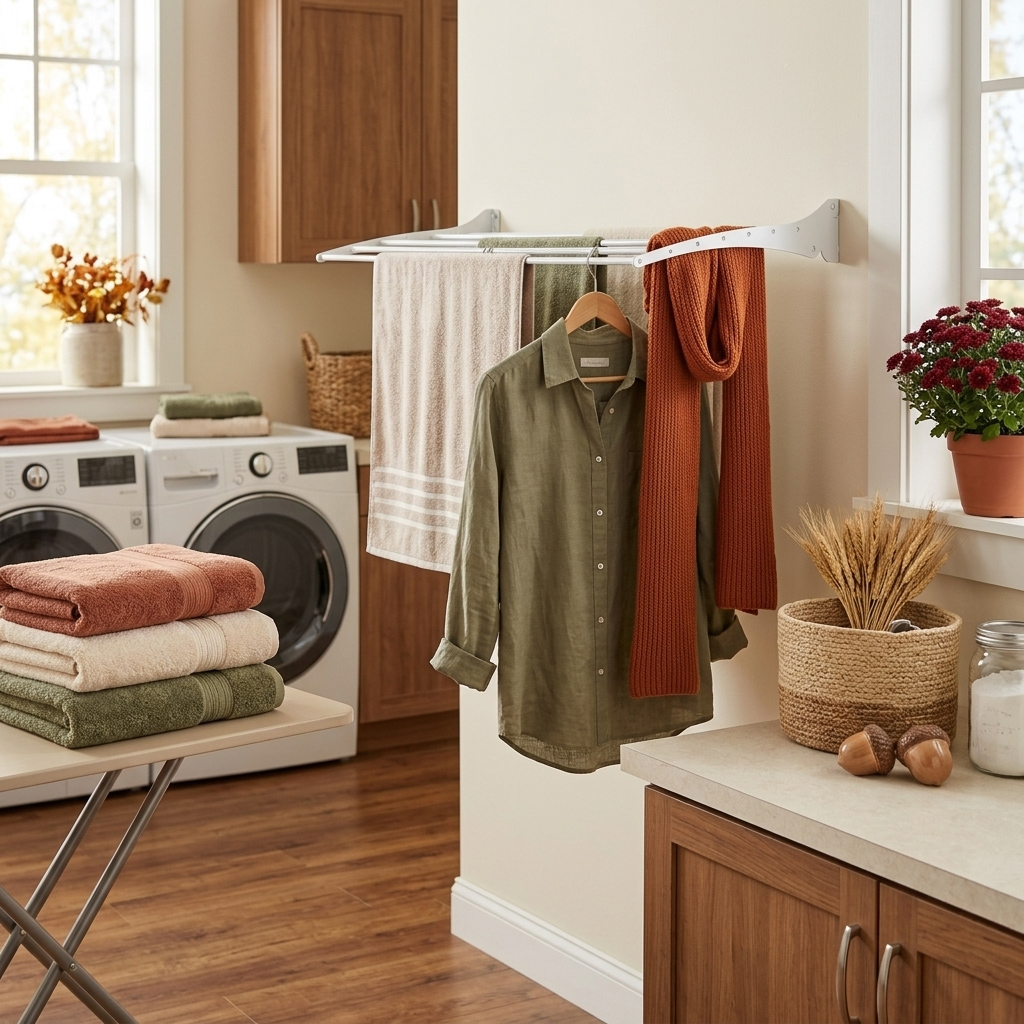
| Wall-mounted rack | Narrow rooms or spaces beside appliances | Creates a defined drying zone without a permanent floor rack |
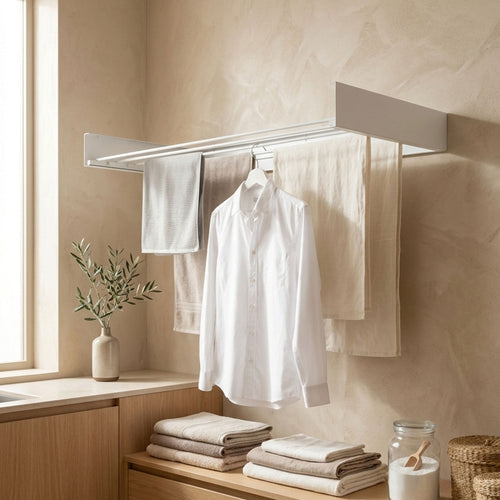
| Retractable rail | Occasional delicates, shirts and ironing overflow | Disappears when not in use and supports flexible routines |
| Stacked washer-dryer arrangement | Small linear layouts | Reduces total appliance footprint and frees space for storage or sorting |
| Pull-out or drop-down surface | Rooms without a fixed worktop | Adds folding space only when needed |
Recovering the floor changes both function and atmosphere. Foxydry’s space-saving decor solutions show how walls, ceilings, and secondary spaces can support laundry without making the room feel overfilled.
-
Choose a drying position that allows air to move around all sides of the load.
-
Keep the drying zone separate from the main appliance-door swing.
-
Use closed storage for bottles so the overhead system does not add visual clutter.
-
Review lighting; overhead drying should not cast shadows over the folding area.